
What Is a CMA? Get Clear Home Prices in Brampton 2026
Learn how a Brampton comparative market analysis (CMA) works in 2026—steps, data, adjustments, and strategy—so you can price, buy, or sell with confidence.
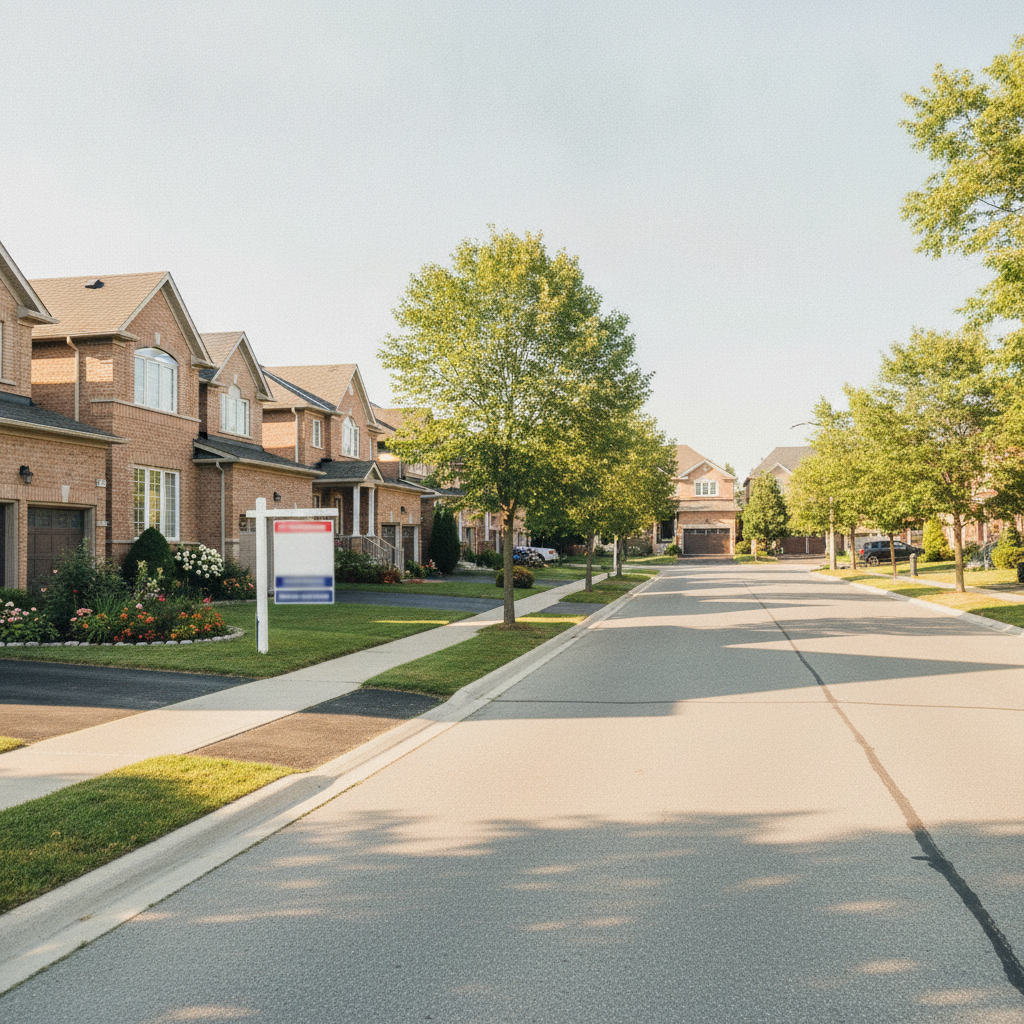
A Brampton comparative market analysis (CMA) is a data-driven home valuation that compares your property to similar recent sales to estimate today’s likely selling price. It combines local sales, active listings, and market trends to guide pricing and offers. Done right, a CMA helps Brampton sellers price confidently and buyers write winning offers.
By Robin Patel, Founder & Realtor, RE/MAX METROPOLIS REALTY
Last updated: July 6, 2026
Above-Fold: Why CMAs Matter + What You’ll Learn
A CMA turns messy market noise into a clear, local price range you can act on. In Brampton, it aligns asking prices and offers with real buyer behavior, reduces time on market, and strengthens negotiation. This guide shows you exactly how CMAs work, what to include, and how to use one to decide faster.
Here’s the thing: most homeowners and buyers see scattered listing prices and headlines, but not the full picture. This complete guide breaks that fog into simple steps you can use today.
- What a comparative market analysis is—and isn’t
- How a Brampton-focused CMA is built step-by-step
- Which valuation methods to trust (and when)
- Best practices that avoid overpricing or overbidding
- Actionable tools and data sources for Brampton neighborhoods
- Real examples: detached, townhouse, and condo scenarios
- Pricing strategy frameworks for sellers and buyers
Quick Summary
A Brampton CMA compares 5–7 relevant sales and 3–5 active listings, applies line-item adjustments for differences, and sets a tight price band for decisions. Use it to set list price, pick offer strategy, and time the market. Refresh it every 2–4 weeks in faster-moving segments.
At a glance, your CMA should include comparable sales, competing listings, market velocity (days on market), absorption (months of inventory), and adjustments for condition, lot, and features. Keep your decision window short, then act.
What Is a Comparative Market Analysis (CMA)?
A CMA is a professional opinion of value built from comparable sales and competing listings. It estimates a home’s likely sale price in current conditions. Unlike automated estimates, a CMA accounts for upgrades, condition, and hyperlocal nuances that algorithms miss.
A comparative market analysis blends three data lanes: solds (proof of value), actives (your real competition), and pendings/conditional deals (near-term price direction). In our experience working with Brampton buyers and sellers, the best CMAs use 5–7 closely matched sales within the last 90–180 days, then adjust for differences such as finished basements, lot size, and parking.
- Purpose: Anchor decisions—list price, offer price, negotiation boundaries.
- Scope: Hyperlocal—same subdivision or micro-area when possible.
- Timing: Freshness matters—market velocity shifts month to month.
- Outcome: A tight price band—not a single number—plus strategy notes.
Here’s why this matters: mispricing by even a few percentage points can shrink showings and increase days on market. A precise CMA gives you the confidence to act quickly without second-guessing.

Why a CMA Matters in Brampton Right Now
Brampton is dynamic: inventory, days on market, and buyer demand shift by property type and neighborhood. A CMA converts that volatility into a plan—so sellers avoid stale listings and buyers avoid overpaying. It’s the difference between guessing and deciding with discipline.
We’ve found local nuance changes the game. Detached homes can see very different absorption than townhomes in the same month, and condos often track a separate rhythm. That’s why your CMA must zoom in by property type and micro-area.
- For sellers: Prevents overpricing (which leads to fewer showings) and underpricing (leaving equity on the table).
- For buyers: Sets a ceiling and a walk-away number based on real, recent trades.
- For timing: Aligns listing dates or offer deadlines with weekly demand cycles.
- For negotiations: Documents adjustments so you can defend your position calmly.
In practice, when we prepare CMAs for Brampton clients, we segment comps by build era, lot type, and finish level. That tighter match creates a price band you can trust—especially when multiple offers or conditional periods compress decision time.
How a Brampton CMA Works: Step-by-Step
Build a CMA by selecting 5–7 comparable sales, 3–5 competing actives, and 1–3 recent pendings. Adjust line-by-line for age, size, baths, parking, basement, lot, and condition. Reconcile to a price band and pair it with a strategy (list, offer, or hold).
Below is a clear process you can follow or review with us before you list or offer.
- Define the subject: Property type, style, size, age, lot, finish level, unique features.
- Set the radius and time frame: Same subdivision preferred; 0.5–1.5 km typical. Use 90–180 days; expand only if thin inventory.
- Pick 5–7 sold comps: Prioritize the closest match; remove outliers with abnormal conditions or concessions.
- Add 3–5 active competitors: These set buyer expectations and affect your showings immediately.
- Include 1–3 pendings: Signals near-term price direction and speed.
- Adjust line items: Bedrooms, bathrooms, finished basement, square footage, garage spaces, lot width/depth, renovations, and exposure.
- Reconcile a price band: Use weighted averages; emphasize the best three comps.
- Write the strategy: For sellers: launch, hold, or price-to-drive-traffic. For buyers: offer range, conditions, and escalation logic.
- Refresh every 2–4 weeks: Markets move; so should your analysis.
Sample adjustment guide (illustrative, not a quote)
| Feature | Adjustment Direction | Why it matters |
|---|---|---|
| Finished basement | Subject has, comp doesn’t → adjust comp up | Added living area and utility appeal |
| Garage spaces | More spaces → adjust comp up | Parking convenience and winter value |
| Lot width/depth | Bigger lot → adjust comp up | Usable yard and privacy premium |
| Recent renovations | New kitchen/baths → adjust comp up | Buyer move-in readiness |
| Days on market | Long DOM → consider softening | Signals buyer resistance |
Pro tip: keep the final range narrow enough to decide. A 1–2% band helps you act; a wide band encourages delay.
Valuation Approaches: CMA vs Online Estimate vs Appraisal
A CMA is the most practical, transaction-ready valuation for active buyers and sellers. Online estimates are fast but shallow. Appraisals are formal and lender-facing. Use the CMA to set strategy, then validate with an appraisal when financing requires it.
Each method has a role. The key is matching the method to your decision window and risk tolerance.
| Method | Best Use | Strengths | Limitations |
|---|---|---|---|
| Online estimate (AVM) | Initial curiosity check | Fast, simple, always-on | Can miss upgrades, micro-locations, and off-market nuance |
| CMA (agent-prepared) | Pricing a listing or writing an offer | Context-rich, strategy-ready, explains adjustments | Quality varies; requires local expertise and current data |
| Appraisal (third-party) | Lender validation for financing | Standardized, documented methodology | Point-in-time; may lag fast market shifts |
Here’s how we use them together: start with our address-based “What’s My Home Worth?” to spark a range, follow with a full CMA to refine, and expect a lender appraisal to confirm the purchase price if you’re financing.
Best Practices for Reliable Brampton CMAs
Choose tight comps, adjust conservatively, and document your reasoning. Segment by property type and build era, watch inventory trends weekly, and refresh your CMA on a fixed cadence. Clarity beats complexity—your goal is a decisive price band with a matching strategy.
Selection and adjustment discipline
- Match micro-areas: Same subdivision or school catchment when possible.
- Use 5–7 solds + 3–5 actives: Balance proof and competition.
- Exclude anomalies: Outlier sales with unusual terms or distress.
- Adjust with restraint: Favor the most similar three comps for weighting.
Market velocity signals
- Days on market (DOM): Shortening DOM signals rising demand; lengthening DOM suggests caution.
- Months of inventory (MOI): Lower MOI often tightens negotiation bands.
- List-to-sale ratio: Tracks if buyers are paying at, under, or over list.
Local considerations for Brampton
- Near Bond Park, lot backing and trail access can create a subtle premium—note exposure and privacy in adjustments.
- Student-rental potential around Ace Acumen Academy may affect absorption for certain property types—watch DOM by bedroom count.
- Seasonality matters: early spring and late summer often change showing volume; refresh your CMA before shifting periods.
Keep your CMA readable. In our practice, a one-page executive summary with charts and a two-page appendix of comps is the sweet spot for swift decisions.
Tools and Data Sources You Can Leverage
Blend local sales data with active inventory, neighborhood nuance, and renovation insight. Use automated tools for speed, then layer in human judgment. The best CMA is part data science, part boots-on-the-ground experience in Brampton streets.
While many sources exist, your goal is triangulation—two or three credible angles that confirm the same story.
- Comparable sales and actives: Focus on 90–180 days for solds; active competitors define buyer expectations now.
- Neighborhood patterns: Cul-de-sacs, corner lots, and backing exposure often influence premiums.
- Renovation recency: Kitchens, baths, roofs, and windows within ~5–10 years can shift buyer perception quickly.
- Pre-construction context: For some buyers, new-build dynamics affect resale demand; see a concise pre‑construction buying process overview for framing.
- Value drivers overview: If you’re new to valuation, here’s a helpful primer on what affects home value in Ontario—use it as a checklist when reviewing comps.
- Seller readiness: A structured home selling checklist can boost marketability, which supports your CMA’s upper range.
Remember, tools accelerate, but judgment decides. In our day-to-day work with Brampton clients, the winning edge is reading micro-trends block by block and validating them with fresh tours.
Case Studies: How a CMA Changes Real Decisions
When your CMA is tight, decisions get easier. Sellers pick confident list prices, and buyers know when to lean in—or walk away. These simplified scenarios show how the numbers and strategy come together in Brampton.
Detached home near parks (3+1 bed, finished basement)
- Profile: 2‑story detached, updated kitchen, finished basement, 1‑car garage.
- Comps: 6 sales within 1 km; two had no finished basements; one had a wider lot.
- Adjustments: Basement value applied; lot width premium moderated by busier street.
- Outcome: Reconciled band favors a list strategy slightly under mid‑band to drive first‑week traffic, with review date set.
Freehold townhouse (newer build, modest upgrades)
- Profile: 3 bed, 2.5 bath, no finished basement, single garage.
- Comps: 5 recent sales; two had finished basements; one had a premium end‑unit position.
- Adjustments: End‑unit premium offset; basement delta documented.
- Outcome: Upper band requires pristine presentation; decision to stage and launch mid‑week to capture weekend surge.
Condo apartment (mid-rise, updated bath, parking)
- Profile: 2 bed, 1 bath, 1 parking, mid‑rise building with average amenities.
- Comps: 7 sales in adjacent buildings; amenity sets vary; views differ.
- Adjustments: View exposure and parking; renovation recency in bath.
- Outcome: Strategy favors a realistic band with room for buyer concessions on timing rather than price.

Across these examples, the thread is the same: match the best comps, adjust with restraint, and publish a strategy you can defend in writing. That’s how you cut through noise in real time.
Pricing Strategy Framework (No Dollar Figures Needed)
Use your CMA to choose one of three paths: price-to-win-traffic, price-at-true-value, or hold-and-test. Each requires a clear launch plan, a review date, and pre-written adjustment rules. Discipline beats improvisation—especially in fast weeks.
For sellers
- Price-to-win-traffic: Aim slightly below the midpoint of your band to spark showings and leverage a review date.
- Price-at-true-value: Launch near the reconciled value with strong presentation; review feedback in 7–10 days.
- Hold-and-test: If comps are thin, launch cautiously and pre-plan reductions by time or feedback signal.
For buyers
- Assertive offer: When comps are rising and inventory is tight, anchor near the upper band with limited, high-value conditions.
- Measured offer: When DOM is lengthening, stay mid-band and preserve conditions for protection.
- Walk-away rule: Put your ceiling in writing before showings; emotion fades when your number is documented.
Write your “if/then” playbook before launch or offer night. In our experience, having decisions pre‑written reduces stress and leads to better outcomes.
How to Use This Guide with Robin Patel
Bring this framework to a discovery call. We’ll build your Brampton CMA, translate it into a one‑page strategy, and align on a 14‑day review cadence. Whether you’re listing or buying, you’ll leave with a clear plan and next steps you can follow.
- Home buyers: Pair your CMA with a “home buying timeline” so showings, financing, and offer windows line up.
- Home sellers: Use our address‑based “What’s My Home Worth?” to kick-start range finding, then refine with a full CMA.
- Everyone: Keep notes on showings and feedback; they’re real-time data that can reshape your band.
Frequently Asked Questions
These short answers address the most common CMA questions we hear in Brampton. Use them to move from uncertainty to action. For deeper help, book a quick strategy call and we’ll tailor it to your property and timeline.
What’s the difference between a CMA and an appraisal?
A CMA is a market-ready estimate based on comparable sales and competing listings, built for pricing and offers. An appraisal is a standardized valuation prepared by a third party, typically for lenders to validate financing on a purchase or refinance.
How many comps should a good Brampton CMA include?
Aim for 5–7 closely matched solds from the last 90–180 days, plus 3–5 active competitors and 1–3 recent pendings. This balance shows proof of value and current buyer expectations, which is essential for pricing and negotiations.
How often should I refresh my CMA?
In faster segments, refresh every 2–4 weeks. If inventory is thin or demand is surging, review weekly. Markets shift by property type and micro-area in Brampton, so staying current helps you avoid stale pricing or overbidding.
Can an online estimate replace a CMA?
Online estimates are useful for a quick pulse, but they can miss upgrades, condition, and hyperlocal nuances. A CMA adds human judgment and line-item adjustments, creating a decision-ready price band for your listing or offer.
What if my home is unique with few comps?
Broaden the time frame carefully, look to adjacent micro-areas, and emphasize adjustments for unique features. Pair the CMA with a launch strategy that tests the market and a pre-planned review date to calibrate quickly.
Conclusion: Turn Your CMA into Action
A sharp Brampton CMA delivers a tight price band and a written plan. Choose your strategy, set your review date, and commit to refresh. That discipline turns market noise into momentum—whether you’re selling or buying your next home.
- Key takeaways:
- Use 5–7 solds, 3–5 actives, and clear adjustments.
- Segment by property type and micro-area for accuracy.
- Pick a pricing path and write your “if/then” rules.
- Refresh on cadence; the best decisions are timely.
Ready to see your Brampton price band? Let’s build your CMA and map your next two weeks with confidence.