
GTA Home Value Guide: What Buyers Notice First in 2026
GTA home valuation tips to set a confident value range. Combine fast address checks with an expert CMA for Brampton and GTA sellers and buyers in 2026.
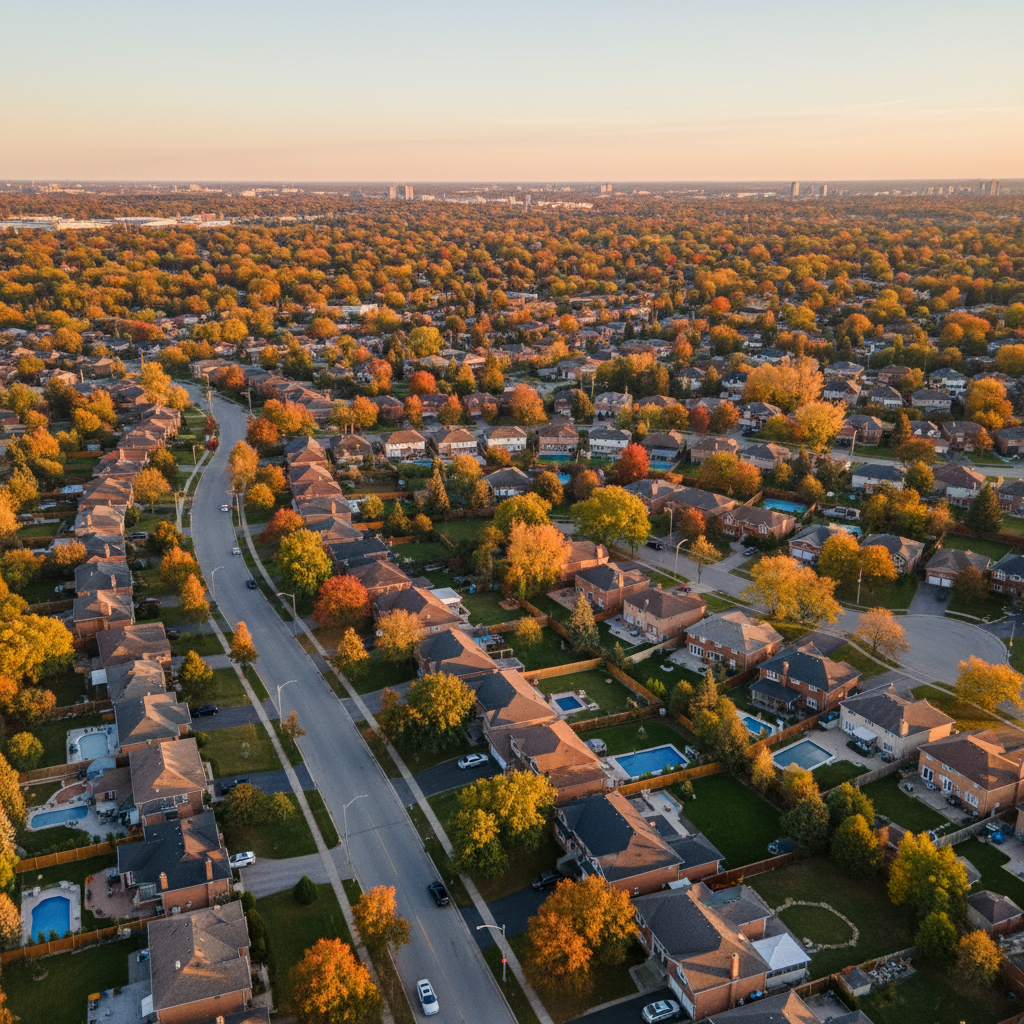
GTA home valuation tips are the clear, practical steps homeowners and buyers use to estimate fair market value across Greater Toronto. From our North York office at 52 Scarsdale Rd Suite 205, we pair fast address-based checks with a full Comparative Market Analysis, so you can price confidently and negotiate with data-backed certainty.
By Robin Patel — Founder & Realtor (ABR, SRS, RENE)
Last updated: 2026-05-21
Quick Summary
Use a layered approach: confirm recent comparable sales, adjust for condition and upgrades, read current buyer demand signals, and validate with an agent-led CMA. For the GTA, track listing-to-sale timelines, supply shifts, and neighborhood perks buyers notice first. This combination gives a tight value range you can act on.
Here’s how this guide helps you move from “What’s my place worth?” to a confident list or offer strategy:
- Define home valuation and where automated estimates fit.
- See why accurate pricing matters more in 2026’s GTA market.
- Follow a step-by-step process to triangulate your value range.
- Compare methods: AVM, CMA, appraisal, and on-the-ground feedback.
- Apply 12+ best practices, ready for Brampton and nearby cities.
- Use practical tools: address-based checks, MLS search, VIP reports.
- Review mini case studies from real GTA scenarios.
What Is GTA Home Valuation?
GTA home valuation is the process of estimating a property’s current market value using comparable sales, buyer demand, and condition-based adjustments. In North York and the broader Toronto area, the most reliable path combines a quick estimate with an agent-prepared CMA that reflects hyperlocal trends and features.
Home valuation pinpoints what informed buyers are likely to pay today—not last year. It blends facts (recent sales) with context (supply, average days on market, and seasonal behavior). While automated valuation models (AVMs) provide a helpful first pass, they can’t see interior finishes, layout flow, or micro-location perks. That’s why we start with a fast address check, then validate with a Comparative Market Analysis tailored to your street.
Core inputs that drive value
- Recent comparable sales: Similar homes within 0.5–1.0 km, sold in the last 60–120 days.
- Condition and updates: Kitchens, baths, roofs, HVAC, windows, and energy upgrades.
- Size and layout: Above-grade square footage, bedroom count, and functional floor plans.
- Micro-location: School zones, commute access, and nearby parks or trail networks.
- Market tempo: New listings, showing traffic, and list-to-sale timelines.
We’ve found that the tightest value ranges come from 3–5 strong comps, then careful adjustments (e.g., lot size, renovation recency) in a side-by-side worksheet. That’s the backbone of a robust CMA for GTA neighborhoods.
Why Valuation Matters in 2026
Accurate valuation in 2026 protects your bottom line and time-on-market. Buyers react to fair pricing within days, while mispricing multiplies showings without offers. With shifting inventory and buyer sentiment, a precise range helps you list decisively or write stronger offers.
Here’s the thing: pricing isn’t just a number—it’s your strategy. When your list price aligns with current demand, you attract the right buyers faster, reduce renegotiations after inspections, and strengthen your leverage across conditions and timelines. On the buy side, realistic value ranges help you avoid overbidding while still winning desirable properties.
Signals we track weekly
- Absorption and supply: New listings versus firm sales, by housing type.
- List-to-sold spread: Whether homes are selling at, below, or above ask.
- Days on market bands: The 7–30–60 day clusters that flag buyer urgency.
- Showing velocity: Early-week inquiries and weekend booking density.
- Offer cadence: Single-offer weeks vs. multiple-offer cycles by submarket.
When these signals tighten, we move quickly with targeted pricing and strong terms. When they loosen, we protect value through presentation, timing, and negotiation guardrails.
How Home Valuation Works (Step-by-Step)
Start with an address-based estimate, gather 3–5 recent comps, adjust for condition and features, then calibrate with current buyer activity. Finish with an agent-led CMA to set a confident list or offer range. Recheck the range right before listing or submitting your offer.
- Get a fast pulse check: Use an address-based estimate to set an initial baseline.
- Pull strong comparables: Same housing type, within 0.5–1.0 km, sold in the last 60–120 days.
- Normalize for differences: Beds, baths, square footage, lot, parking, and key upgrades.
- Weigh buyer demand: Showing volume and days on market in your micro-area right now.
- Run a CMA: Side-by-side comparison with net adjustment notes for each comp.
- Stress-test the range: What happens if demand rises or cools over the next 2–3 weeks?
- Set strategy: Position price and terms to meet your goal (speed, certainty, or maximizing proceeds).
Comparison of valuation methods
| Method | Strengths | Limitations | Best Use |
|---|---|---|---|
| AVM (automated estimate) | Fast baseline; broad market context | Can’t see interiors or unique features | Early screening; curiosity checks |
| CMA (agent-prepared) | Grounded in local comps and adjustments | Requires up-to-date sales and expert inputs | Setting a list price or writing offers |
| Professional appraisal | Standardized methodology; lender recognized | Point-in-time; may lag hyperlocal shifts | Financing checkpoints; dispute resolution |
| Buyer feedback loop | Real-time sentiment during showings | Anecdotal; needs enough traffic | Fine-tuning price and presentation |
In our experience, the CMA drives the most reliable pricing decisions because it blends numbers with nuance. We still confirm the range with an early open-house read or first-week showing feedback when listing in fast-moving pockets.
Types, Methods, and Approaches You Can Combine
Use multiple lenses: pair a quick AVM with a CMA, then validate with on-the-ground buyer signals. Add an appraisal for financing checkpoints or when a unique property needs a third-party view. Combining methods narrows your value to the most actionable range.
AVM + CMA synergy
- AVM gives you macro context in minutes.
- CMA adds human judgment on upgrades, floor plans, and block-by-block desirability.
- Result: A tighter, decision-ready range you can defend in negotiations.
When to add an appraisal
- Financing thresholds: Lenders may require appraisals for underwriting.
- Unique properties: Custom builds, unusual lots, or limited local comps.
- Estate or legal needs: When formal documentation is prudent.
Reading real-time buyer signals
- Showing-to-offer ratio: Many showings without offers signals price or presentation gaps.
- Feedback themes: Consistent “needs updates” comments guide staging or improvement choices.
- Offer timing: Early offers suggest strong alignment; delays mean recalibrate.
On busy GTA weekends, we monitor booking density, agent feedback within 24 hours, and how your home stacks up to new competition released the same week. Small adjustments (presentation or terms) often rescue momentum without shifting your target.
GTA Home Valuation Tips: The Essentials for 2026
Focus on three pillars: precise comps, condition truth, and demand now. Use 3–5 recent sales, document upgrades and wear honestly, and track local supply and showing activity. With those inputs, your CMA will pinpoint a value band that stands up in the GTA’s 2026 market.
Comps that actually compare
- Stay within 0.5–1.0 km and 60–120 days; widen carefully if inventory is thin.
- Match housing type (detached, semi-detached, townhouse, condo), lot size, and bed/bath counts.
- Exclude outliers: estate sales, heavy fixer-uppers, or unusually staged flips unless adjusted.
Condition, upgrades, and honest adjustments
- Note age and condition of roof, windows, furnace/AC, electrical, and plumbing.
- List major renos with approximate timelines (e.g., kitchen ~5–7 years old).
- Account for layout efficiency (open-concept vs. segmented, natural light, storage).
Demand and seasonality
- Watch listing volume and showing bookings in your micro-area this week.
- Expect spring surges and late-summer lulls; recalibrate if days-on-market shifts by 7–10 days.
- Scan new competing listings every 48–72 hours while active.
We wrap these factors into a readable CMA summary that flags where buyers will focus first—kitchen quality, primary suite, storage, parking, and outdoor space. It’s not guesswork; it’s how buyers shortlist homes before stepping through the door.
Tools and Resources You Can Use Today
Start with a quick address-based estimate, then request a CMA and browse live MLS listings by neighborhood. Complement that with VIP buyer/seller reports so your pricing and offer strategy are grounded in real GTA data and current competition.
From TheReliableRealtor.ca toolkit, here’s what most homeowners and buyers use first:
- Address-based “What’s My Home Worth?” check: A fast baseline to orient your expectations.
- Agent-prepared CMA: A deeper report with side-by-side comps and adjustment notes.
- MLS/IDX search and featured listings: See what you’re competing against today.
- VIP real estate reports: Digestible insights to avoid common valuation and offer mistakes.
For additional perspective, you can also scan a practical guide on seller marketing fundamentals and a regional explainer on value drivers in Ontario. These pieces provide context on how presentation, exposure, and local buyer habits intersect with pricing.
Want help assembling everything? We’ll line up recent comps, show you today’s competition, and deliver a clear, data-forward range you can act on.

Mini Case Studies: How Valuation Plays Out in the GTA
Real results follow consistent process. In Brampton and nearby cities, we anchor price to 3–5 comps, adjust for condition, and read buyer signals in the first 72 hours. When pricing aligns, quality offers arrive faster with fewer renegotiations.
Brampton semi-detached with a five-year kitchen
- Situation: Sellers unsure whether to list pre- or post-refresh.
- Approach: We ran a CMA with three near-identical semis, adjusted for a 5–7 year kitchen and newer windows.
- Action: Minor paint and lighting changes; priced within the tight mid-range.
- Outcome: Strong weekend showings, clean offer cadence, minimal conditions.
Mississauga condo with excellent transit access
- Situation: Buyer wary of overpaying amid new listings.
- Approach: We narrowed comps to the same building and two adjacent towers, 90-day window.
- Action: Wrote an offer aligned with recent per-square-foot trends and unit upgrades.
- Outcome: Accepted offer without escalation; appraisal aligned with our range.
Etobicoke detached with dated baths
- Situation: Seller debated bathroom updates before listing.
- Approach: CMA showed buyers discounted dated baths more than expected.
- Action: Focused on deep clean, grout refresh, staging, and strategic pricing.
- Outcome: Competitive activity in week one; inspection feedback validated our adjustment.

Pricing Strategy vs. Valuation
Valuation sets your fair market range; pricing is the position you choose within it. Your target—speed, certainty, or maximum proceeds—determines whether you list at, slightly below, or strategically above the midpoint and how you structure offer timelines and terms.
Think of valuation as your map and pricing as your route. The same home can be priced three ways depending on your goals, timing, and current buyer competition. We calibrate list timing, marketing roll-out, and offer instructions to fit the outcome you want while protecting leverage.
Choosing your lane
- Speed first: Position near the low end; aim for early showings and firm timing.
- Balanced: List near the midpoint; emphasize condition and neighborhood perks.
- Maximize proceeds: Anchor near the high end only with supporting comps and standout features.
We document the rationale in your CMA so everyone—buyers, agents, appraisers—can see how we landed on the number and why it holds up.
Neighborhood Factors Buyers Notice First
Buyers scan commute access, school catchments, green space, parking, and storage first. In the GTA, fast highway or transit links plus well-kept kitchens and baths often drive shortlist decisions before a showing is even booked.
What most people don’t realize: buyers often decide within minutes whether a home makes their top three. Your listing photos, floor plan clarity, and evidence of care (systems and finishes) set the tone long before the walkthrough.
Local considerations for North York
- Leverage proximity to green space like Bond Park for outdoor lifestyle appeal in your remarks.
- Plan listings around spring and early fall surges; snow and holiday weeks can slow showing velocity.
- Commuter nuance: stress easy access to major corridors; mention nearby institutions like Ace Acumen Academy only when relevant to the buyer profile.
Get a Data-Driven CMA for Your Address
If you want a tight, defensible range for your GTA home, request a CMA with 3–5 handpicked comps and clear adjustment notes. We’ll pair it with active listing intel so your pricing or offer strategy lands with confidence.
Free value check + CMA walkthrough: Share your address and timing. We’ll deliver a concise summary, a side-by-side comp grid, and next-step options based on your goals.
Serving Brampton, Mississauga, Etobicoke, North York, and the broader GTA.
Best Practices That Add Confidence (and Save Time)
Document upgrades, photograph honestly, and keep your comp set tight. Recheck active competition every 48–72 hours, and align pricing to your goal. These habits compress time-on-market and reduce renegotiations.
Curation and documentation
- Create a one-page upgrade log with approximate dates for major systems and renovations.
- Gather permits and warranties where available to support buyer trust.
- Use a simple floor plan sketch; buyers value clarity in layout and measurements.
Market watch rhythm
- Refresh the comp set weekly; remove stale or mismatched sales.
- Track new actives within 0.5–1.0 km; note price, condition, and days on market.
- Adjust your showing strategy based on booking volume and feedback themes.
Presentation principles
- Light, clean, and decluttered rooms read larger in both photos and showings.
- Maximize curb appeal: clear pathways, fresh mulch, and tidy entry hardware.
- Stage to highlight storage, natural light, and flexible spaces (office/guest).
These aren’t fancy tricks—they’re the repeatable, low-friction steps that keep your valuation aligned with how buyers actually sort listings.
Helpful Background Reading
Supplement your CMA with practical, regionally relevant reading on value drivers and seller marketing. Use outside guides to sharpen presentation and avoid common listing pitfalls that undermine perceived value.
For perspective on Ontario value drivers and listing fundamentals, consider scanning these plain-English resources. They’re useful for sellers who want a quick refresher on what matters to buyers and how marketing intersects with pricing strategy. Use them to sanity-check your plan before launch.
For a seller’s marketing refresher, see this Ontario home marketing guide. If you prefer an overview of how agents frame value in Ontario, this value of your home guide breaks down common factors. Buyers in Peel region may also find a Mississauga home buying guide helpful when evaluating condos and townhomes.
Frequently Asked Questions
These concise answers address common valuation questions for GTA buyers and sellers. Use them to align expectations before you list or write an offer, then confirm details with a tailored CMA for your address.
What’s the difference between an online estimate and a CMA?
An online estimate delivers a quick baseline using public data. A CMA adds local expertise: recent comparables, adjustment notes for condition and layout, and active competition. Use the estimate for orientation and the CMA to set—or win—your price.
How many comparables should I use?
Aim for 3–5 strong comps within 0.5–1.0 km sold in the last 60–120 days. Match housing type and bed/bath count. Add or subtract for major differences like renovations, lot size, parking, or premium exposures.
Do I need an appraisal before listing?
Usually no. A well-prepared CMA is enough to set an effective list price. Consider an appraisal for unique properties, legal or estate needs, or when financing checkpoints require a third-party opinion.
How often should I update my valuation?
Update your range whenever new, truly comparable sales close nearby or when market tempo shifts. If you’re actively listing, recheck every 48–72 hours to track new competition and early showing feedback.
What do buyers notice first in photos?
Kitchens and baths, natural light, storage, and outdoor space. Crisp photos, a readable floor plan, and evidence of care (systems, windows, roof) help buyers pre-qualify your home for a showing—often within minutes.
Wrap-Up: Turn Your Value Range into a Winning Strategy
Pair a quick estimate with a hands-on CMA, then align pricing to your goal—speed, certainty, or maximizing proceeds. Recheck competition every 48–72 hours. That’s how GTA sellers and buyers turn a value range into real results.
- Key takeaways: Tight comps, honest condition notes, and live market signals drive accuracy.
- Action steps: Get an address check, request a CMA, preview active competition, and pick your pricing lane.
- Next move: Share your address and timeline; we’ll deliver a clear, defensible range and strategy.