
Home Valuation Mistakes: Protect Your Price in 2026
Avoid common home valuation mistakes to protect your price. Learn CMA vs appraisal vs AVM, 15 errors to skip, and a 7-day prep plan for Brampton sellers.
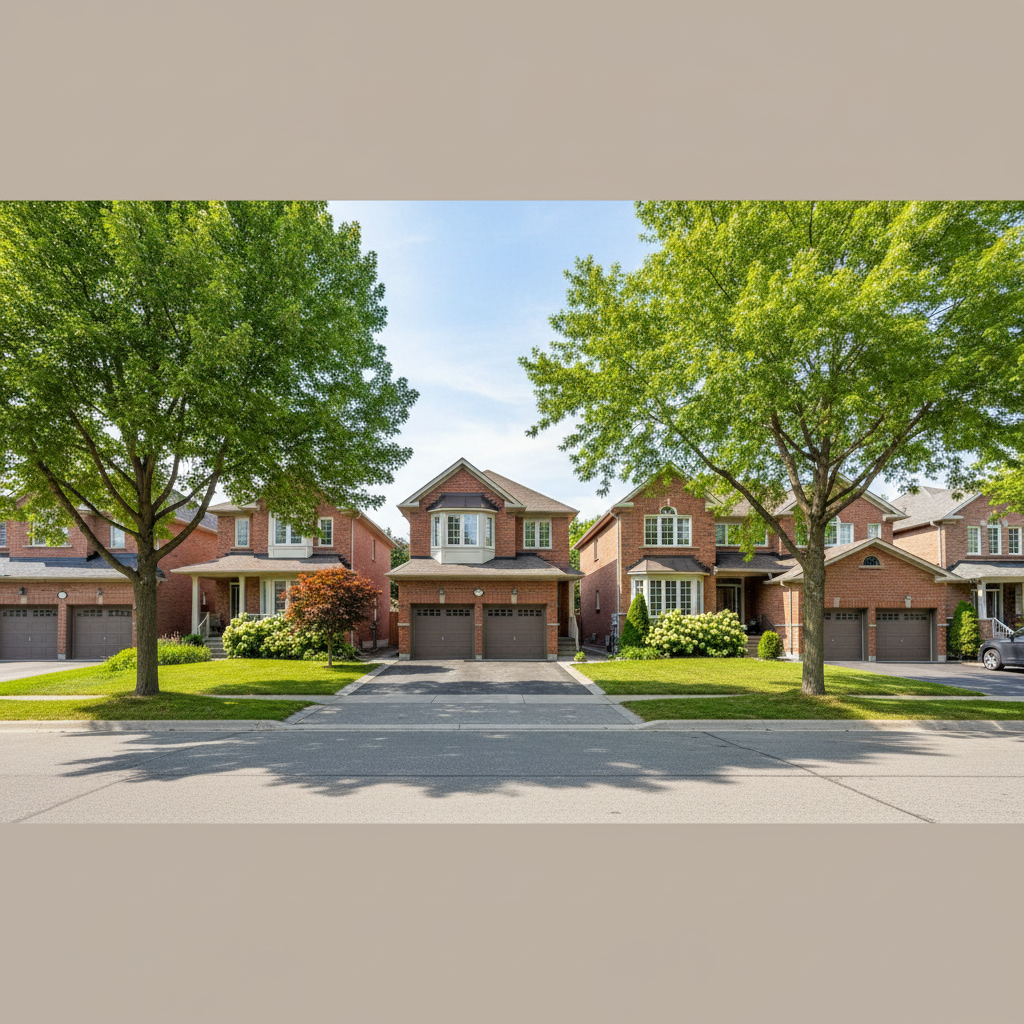
Home valuation mistakes to avoid are the specific errors that cause a property’s estimated worth to skew too high or too low. From our North York office at 52 Scarsdale Rd Suite 205 in Toronto, we help Brampton homeowners prevent valuation gaps by using real comps, condition-adjusted CMAs, and market timing. Getting this right protects your equity and negotiation power.
By Robin Patel — Founder & Realtor (ABR, SRS, RENE) • Last updated: 2026-05-14
Above the Fold: Why Home Valuation Mistakes Cost You
Small valuation errors compound into big pricing gaps at offer time. The most reliable way to protect your price is to align condition, comps, and timing with a structured CMA. This guide shows you exactly how we do that for Brampton sellers and buyers so your next move is confident, not costly.
Here’s what you’ll learn and use right away:
- What a valuation really is and how it differs from an appraisal and an AVM
- Why accuracy matters for days on market, buyer interest, and negotiation leverage
- How to run a simple CMA checklist (and when to ask us for a deeper review)
- Fifteen common mistakes to avoid with practical, local examples
- Tools you can use today: address-based valuation, location search, and VIP reports
Quick Summary
A strong home valuation blends recent, nearby comparable sales, realistic condition adjustments, and current demand trends. Avoid errors like using list prices as comps, ignoring days-on-market signals, or overestimating upgrades. With a structured CMA and local expertise, you’ll price to attract offers while protecting your bottom line.
- Use recent comps (often within the last 90 days) and within a similar micro-market.
- Adjust for condition with notes on age, finishes, layout, and maintenance.
- Cross-check methods: CMA vs. appraisal vs. AVM.
- Watch supply/demand: new listings, absorption rate, and seasonal shifts.
- Document assumptions so you can defend price during negotiations.
What Is Home Valuation?
Home valuation is the process of estimating a property’s most probable selling price based on comparable sales, condition, and current market demand. It is not a guess; it’s a structured analysis that blends data with local judgment to set a defensible price and guide negotiations.
In practice, a professional valuation uses:
- Comparable sales (comps): Typically 3–6 recently sold properties with similar size, style, and location.
- Adjustments: Plus/minus for features like finished basements, lot size, parking, and renovation quality.
- Market context: Inventory levels, days on market, seasonality, and buyer sentiment.
On our site, homeowners often start with the address-based “What’s My Home Worth?” estimator, then ask us to validate with a condition-aware Comparative Market Analysis (CMA). Buyers we represent cross-check this same framework to avoid overpaying in competitive situations.
Why Accurate Valuation Matters
Accurate valuation reduces time on market, attracts qualified buyers, and strengthens negotiation outcomes. Mispricing leads to fewer showings, stale listings, and low-ball offers. Getting value right from day one preserves your leverage and helps you move with confidence.
Accuracy impacts real outcomes:
- Days on market: Properties aligned with real comps tend to secure showings quickly.
- Offer quality: Correctly priced listings draw pre-approved buyers rather than “test the seller” shoppers.
- Appraisal alignment: Buyers using financing depend on appraisals; wide gaps risk re-negotiation or delays.
- Negotiation stance: A data-backed price lets you defend value and counter strategically.
We’ve found that sellers who combine realistic pricing with professional staging and strong listing media can generate more early showings and reduce concessions later. Conversely, overpricing early often ends with incremental reductions and a weaker negotiating position.
How Home Valuation Works (CMA, Appraisal, AVM)
Valuation triangulates three lenses: an agent-led CMA, a lender-focused appraisal, and an algorithmic AVM. Used together, they reveal market-supported price, financing risk, and trends. Relying on one alone increases error; cross-checking narrows your range and improves confidence.
Here’s the high-level process we follow when clients request a deeper review:
- Scope the subject: Square footage, beds/baths, lot, parking, finishes, recent updates, and any permits.
- Define the micro-market: School catchments, transit access, and natural boundaries that shape buyer behavior.
- Select 5–8 candidate comps: Narrow to the most similar 3–6 recent sales.
- Apply adjustments: Condition, size, layout, exposure, outdoor space, and renovation quality.
- Cross-check with AVM: Use the “What’s My Home Worth?” tool as a secondary signal, not the final word.
- Stress test: Consider current listings and pending sales pressure.
- Document the range: Present a defensible value band and the logic behind it.
Want a second perspective on interpreting reports? This practical primer on how to use a valuation report outlines what sections matter most and how to spot weak comps.

Types, Methods, and Approaches
Most homes rely on the sales comparison approach (comps and adjustments). Appraisers may add the cost approach for newer construction and the income approach for rentals. Agents run CMAs; lenders use appraisals; online tools use AVMs. The smartest path is to compare all three.
Common approaches explained
- Comparative Market Analysis (CMA): Agent-led, uses recent sales, active listings, and pendings with qualitative adjustments.
- Appraisal (sales comparison): Lender-facing report emphasizing verified data, objective adjustments, and standardized forms.
- Automated Valuation Model (AVM): Algorithmic estimate using public and private data; fast but sensitive to outliers and missing details.
- Cost approach: Land value plus depreciated replacement cost; helpful for unique or very new properties.
- Income approach: For duplexes or rentals, based on market rents and cap rates.
| Method | Best For | Strengths | Watch Outs |
|---|---|---|---|
| CMA | Listing strategy and offer prep | Local nuance, fast iteration, integrates staging/readiness | Subjective adjustments if comps are weak |
| Appraisal | Financing approval | Standardized, verifiable data, third-party credibility | Lag vs. rapidly changing markets |
| AVM | Quick orientation | Instant, broad data coverage | May miss renovations, layout quality, or micro-market signals |
For new-build or pre-construction context, reading a pre‑construction buying process explainer can clarify where cost and sales comparisons intersect before completion.
15 Home Valuation Mistakes to Avoid
The most expensive valuation mistakes come from weak comps, unverified assumptions, and ignoring timing. Avoid list-price “comps,” overvaluing DIY upgrades, skipping condition adjustments, and pricing into the wrong season. A structured CMA prevents most errors—especially when you document why a price is defensible.
Mistakes we correct every week
- Using list prices as comps: Sold prices (with conditions) tell the truth; ask for 3–6 similar, recent sales.
- Ignoring micro-markets: Busy corridors, school zones, and transit access can shift value within a few blocks.
- Overweighting AVMs: Great for orientation, but they rarely reflect renovation quality or layout flow.
- Assuming upgrades return dollar‑for‑dollar: Quality, permits, and buyer taste matter more than invoices.
- Skipping condition adjustments: Roof age, windows, HVAC, and moisture history require real adjustments.
- Cherry‑picking high comps: Include the full picture—similar size, age, and finish, not just the top outlier.
- Forgetting active and pending listings: Competing inventory and recent pendings set buyer expectations now.
- Mistiming the launch: Holiday lulls and deep winter storms can sap early momentum; plan your go‑to‑market.
- Under‑estimating staging impact: Staging highlights light, flow, and function—critical for photography and showings.
- Poor photo sets: Dim images and missing rooms depress perceived value and lower tour requests.
- Ignoring days‑on‑market signals: A listing that lingers invites bargain hunting; fix either price or presentation fast.
- Not disclosing repairs: Surprises during inspection or appraisal destabilize deals and invite retrades.
- Using the wrong radius: In Brampton, a half‑kilometer can change buyer profiles; respect neighborhood lines.
- Overlooking lot and orientation: Sunlight, privacy, and useable yard area are real value drivers.
- No documentation: Without a clear CMA workbook, it’s tough to defend your number when negotiating.
When buyers we represent see a home priced on listing wishes rather than data, we flag the gaps and structure offers to reflect market reality. Sellers get the same rigor before we publish a list price.
Step-by-Step: A 7‑Day Valuation Prep Plan
In one focused week, you can tighten your valuation range and boost buyer appeal. Gather records, fix quick wins, stage for light, and align your CMA with fresh comps and pendings. This plan compresses confusion into clarity so you list (or offer) with confidence.
- Day 1 — Records: Collect permits, warranties, utility summaries, and upgrade dates.
- Day 2 — Walk‑through: Note condition, light, odors, and small fixes; prioritize curb appeal and entry.
- Day 3 — Quick improvements: Patch, paint touch‑ups, deep clean, declutter, and service HVAC.
- Day 4 — Photo‑ready: Stage to highlight space and flow; schedule pro photos in daylight.
- Day 5 — Data refresh: Pull new sales and pendings; confirm 3–6 strong comps.
- Day 6 — CMA review: Apply adjustments; validate with the AVM as a sense‑check.
- Day 7 — Launch plan: Set go‑live timing, showing windows, and feedback loop.
Need a template to track assumptions and adjustments? This Ontario‑focused guide to valuation fundamentals walks through the core levers that shape a defensible price.
Local Valuation Realities in North York, Toronto, and Brampton
Neighborhood context changes value. In North York and the broader Toronto market, school catchments, transit, and condo vs. freehold dynamics shift buyer demand. Brampton adds its own micro‑market patterns. Ground your valuation in local signals, not citywide averages.
When we advise Brampton sellers and buyers from our North York base, we translate metro‑level news into street‑level pricing. That means understanding:
- Micro‑market variances: Even adjacent subdivisions can trade differently based on age, layout, and parking norms.
- Transit influence: Commute time shifts buyer pools; proximity to major routes and transit nodes matters.
- Product mix: Freehold vs. condo activity influences buyer expectations and lender appraisals.
Local considerations for North York
- Schedule listing photos when Bond Park foliage is vibrant; seasonal greenery lifts curb appeal in images.
- Winter launches near holidays tend to be slower; align go‑live for stronger Toronto buyer traffic and daylight.
- Weekday showings near Ace Acumen Academy may face traffic spikes; set smart viewing windows.

Best Practices to Tighten Your Valuation Range
Triangulate methods, tighten comp selection, and document every adjustment. Then test your number against active competition and showing feedback. The best practice is simple: price to the market you have, not the one you wish for.
- Define the radius by buyers, not maps: Use school lines and commute patterns to choose comps.
- Prioritize recency: Favor comps from the last 90 days; include pendings to reflect live demand.
- Adjust for function: A great layout nearly always beats a slightly larger but awkward plan.
- Stage for light: Bright, decluttered rooms photograph larger and draw more viewings.
- Track showing metrics: If the first week is quiet, address price, photos, or accessibility immediately.
- Keep a CMA workbook: Note each change and why; this is invaluable at offer time.
Tools and Resources (Use Them Wisely)
Start with an address-based estimate for orientation, then upgrade to a condition-aware CMA and, when needed, a third-party appraisal. Tools don’t replace judgment; they structure it. Use each for its best job and you’ll avoid most valuation pitfalls.
- Address-based “What’s My Home Worth?”: Quick orientation; we validate and refine it with on-site detail.
- Location-based property search: See active competition by neighborhood and price band.
- VIP real estate reports: Monthly insights that help time your launch and anticipate offers.
- CMA review with our team: ABR/SRS/RENE-backed guidance to defend value at the table.
- For an extra perspective, scan this valuation report walkthrough to see where homeowners often misread the data.
Free consultation (soft invite): Want a second set of eyes on your CMA, upgrades list, or launch timing? Book a quick call with Robin and leave with a clearer value range and next steps.
Case Studies and Local Examples
Real homes prove the point: accurate comps, honest condition notes, and thoughtful staging tighten value ranges. Here are local scenarios showing how a few decisions move the price needle and shorten days on market.
Brampton detached with unfinished basement
A family in Brampton started with an AVM that ignored their original finishes. Our CMA used four recent sales with similar square footage and lots, then adjusted for the unfinished basement and roof age. After targeted staging and daylight photos, showings spiked and the first strong offer aligned with our documented range.
North York condo with split layout
A condo seller assumed an upgrade list justified a higher target. We selected three comps in the same building tier and prioritized floor height, exposure, and layout functionality. The price aligned with recent pendings, and an early offer cleared the appraisal hurdle without drama.
First‑time buyer avoids overpaying
Representing a first‑time buyer, we challenged the listing’s top‑heavy comp set and inserted two better matches from an adjacent micro‑market. Our client made a competitive but protected offer with conditions structured around inspection and appraisal timing.
Frequently Asked Questions
These quick answers cover the questions we hear most about valuation, CMAs, appraisals, and how to prepare. Use them to sanity‑check your plan before you list or write an offer.
What’s the difference between a CMA and an appraisal?
A CMA is an agent’s pricing analysis to guide listing or offer strategy using recent sales, actives, and pendings. An appraisal is a third‑party report used by lenders to confirm value for financing. We use both: CMA for strategy, appraisal for loan approval.
How many comps should I use?
Most analyses use three to six strong, recent sales within a defined micro‑market. We also review active and pending listings to reflect live competition and buyer expectations.
Are online estimates reliable?
They’re useful for orientation, but they often miss renovation quality, layout efficiency, and street‑level differences. Treat them as a starting point and confirm with a condition‑aware CMA and, if financing is involved, a lender appraisal.
When should I adjust my price?
If the first week’s showings and inquiries are thin compared to similar listings, review photos, access, and pricing. A timely, data‑based adjustment preserves momentum and reduces the risk of a stale listing.
Do upgrades always increase value?
No. Permits, workmanship, and buyer preferences determine impact. Neutral, well‑executed improvements in kitchens, baths, and lighting tend to help more than highly personalized choices.
Key Takeaways
Protect your price by using recent, relevant comps, honest condition adjustments, and local context. Cross‑check CMA, appraisal, and AVM, then document your case. Launch with strong media and precise timing to attract serious buyers fast.
- Define your micro‑market and pick 3–6 strong comps.
- Adjust for condition, layout, and orientation—not just size.
- Use the AVM as a sense‑check, not the final say.
- Time your launch and invest in great photos and staging.
- Keep a CMA workbook to defend value during negotiations.
Conclusion: Your Next Best Step
The surest way to avoid home valuation mistakes is a structured CMA backed by local expertise. Start with an address‑based estimate, then refine with condition notes, fresh comps, and a documented range you can defend at the table.
- Start now: Gather records, note condition, and make quick prep fixes.
- Get a sanity check: Ask us to review your comps and adjustments.
- Plan the launch: Align photography, staging, and timing for maximum impact.
Ready to protect your price in Brampton and the GTA? Let’s talk strategy from our North York base and make your next move simple and confident.