
Mississauga Home Values: 2026 Comparative Market Analysis Guide
A practical Mississauga comparative market analysis guide for 2026—what a CMA is, why it matters, and how to use it for pricing and offers.
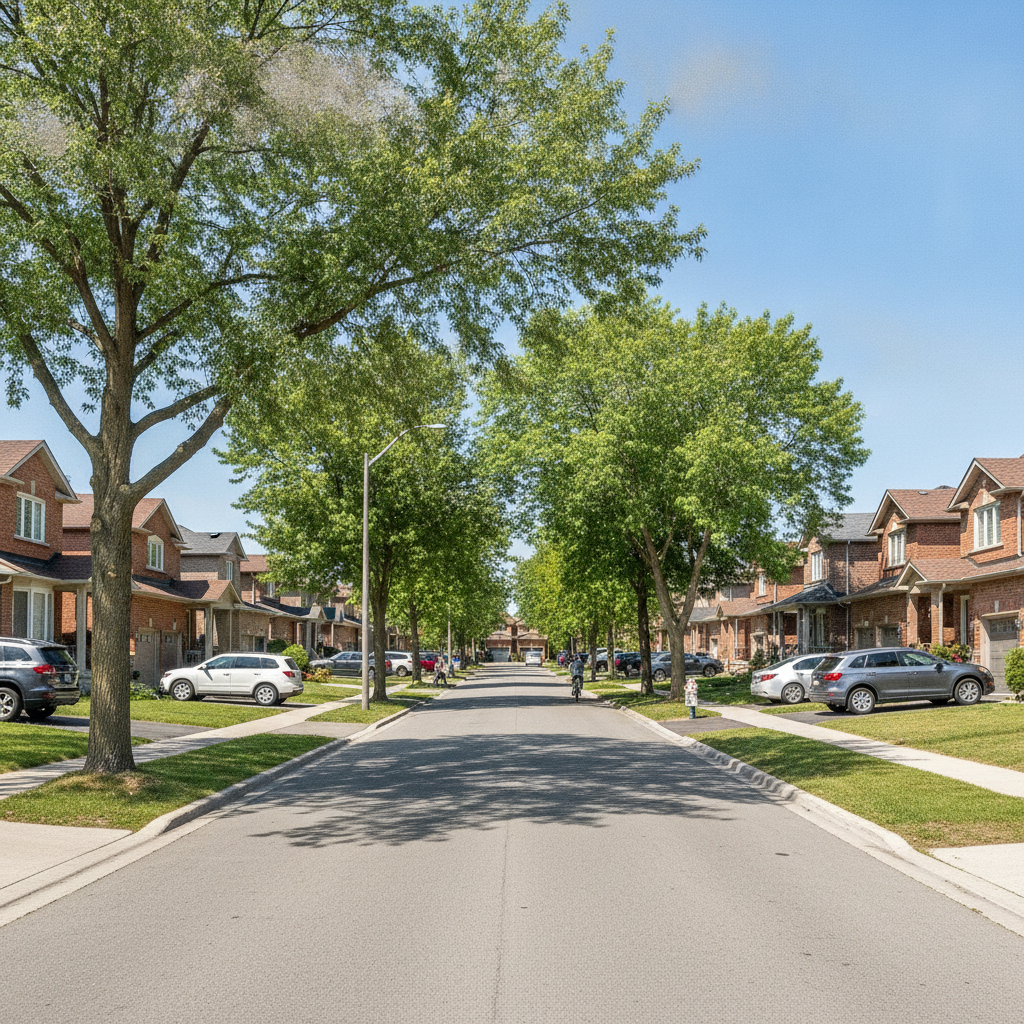
A comparative market analysis (CMA) is a data-driven estimate of a home’s current market value based on recent nearby sales, active competition, and local trends. This Mississauga comparative market analysis guide explains the method step-by-step so sellers and buyers can act confidently. From our Suite 205 office at 52 Scarsdale Rd, we help Greater Toronto homeowners turn CMA insight into smart moves.
By Robin Patel, Founder & Realtor, RE/MAX METROPOLIS REALTY
Last updated: 2026-06-19
Summary
A Mississauga CMA evaluates your property against recent comparable sales, active listings, and pending deals to estimate today’s likely sale price range. It blends quantitative metrics (days on market, list-to-sale ratios) with local nuance (schools, transit, renovations) to guide pricing, offers, and timing in 2026.
- What you’ll learn: CMA basics, local factors, step-by-step workflow, and how pros validate value.
- Who this helps: Mississauga sellers planning to list, and buyers preparing competitive offers.
- Tools we use: Location-based MLS search, an address-based “What’s My Home Worth?” workflow, and VIP market reports.
- Outcome: A realistic value range and a clear action plan for list strategy or bidding strength.

What is a Comparative Market Analysis (CMA)?
A comparative market analysis is a professional estimate of a home’s fair market value built from 3–7 highly similar properties: recent sales, active competitors, and expired/terminated listings. It calibrates condition, size, features, and location to produce an evidence-based price range for today’s market.
Think of a CMA as the on-the-ground counterpart to an algorithmic estimate. It’s human-guided, comp-focused, and locally tuned. We examine style (detached, semi, townhouse, condo), interior updates, parking, lot size, orientation, and micro-location to align your home with the sales that best predict price.
- Comparables (“comps”): Ideally within 0.5–1.0 km and closed in the last 60–120 days.
- Adjustments: Square footage, bedroom/bath count, finish level, age, and unique features.
- Market reads: Days on market median, sale-to-list ratio, and absorption rate by type.
- Output: A price range plus a recommended list strategy based on your risk tolerance.
Because no two homes are identical, we use objective adjustments and local experience to normalize differences. The result is a number you can defend to buyers, appraisers, and yourself.
Why CMA matters in Mississauga’s 2026 market
In the Mississauga and Toronto metro area, accurate CMAs set the pace for fast, clean sales and stronger offers. Inventory pockets shift block-by-block; a well-calibrated CMA stops overpricing, protects equity, and helps buyers enter with confidence in competitive neighborhoods.
Local nuance drives outcomes. Two streets apart can mean different school zones, transit options, or lot patterns. We analyze micro-markets in Erin Mills, Clarkson, Port Credit, Meadowvale, Cooksville, and City Centre to capture true buyer demand. Well-tuned CMAs correlate with shorter days on market and fewer price reductions in balanced segments.
- Seller upside: Right-pricing attracts early qualified traffic and prevents staleness.
- Buyer strength: Value clarity sharpens offer limits and reduces emotional overbids.
- Timing edge: Seasonal cadence in Peel Region often shifts listing momentum within 1–2 weeks.
- Risk control: CMAs reduce the chance of financing shortfalls from lender appraisals.
In our experience representing buyers and sellers across Peel and the broader GTA, a comp set anchored in the last 60–90 days with at least three true matches consistently aligns expectations and outcomes.
How a CMA works: step-by-step in Mississauga
A Mississauga CMA follows a repeatable workflow: define the subject, select 3–7 close comparables, normalize with adjustments, read the trend line, and recommend a strategy. The deliverable is a defendable price range plus next steps for listing or offer preparation.
- Define the subject home: Type, square footage, bed/bath, lot, parking, mechanicals, updates, and true condition.
- Draw the radius: 0.5–1.0 km, same school catchment when possible; expand only if inventory is thin.
- Time-box the data: Prioritize the last 60–120 days for sales; include actives and pendings for momentum.
- Pick 3–7 best comps: Similar age, finish level, and lot influence; exclude outliers or unique one-offs.
- Adjust differences: Size, baths, finished basement, garage, lot depth, renovations, and outdoor spaces.
- Read velocity metrics: Days on market medians, sale-to-list ratios, and months of inventory by segment.
- Set the range: A low, mid, and high anchor tied to condition, showing plan, and risk tolerance.
- Recommend strategy: Launch timing, prep, photo plan, showing cadence, and offer-handling rules.
For buyers, we flip the lens: validate a target home’s value, set a ceiling, and map offer scenarios (firm vs. conditional) based on your priorities and lender requirements.
Types and methods: CMA vs. AVM vs. appraisal
CMAs are agent-led and market-calibrated, AVMs are algorithmic instant estimates, and appraisals are lender-ordered valuations for underwriting. A full decision toolkit uses all three: CMA for strategy, AVM for a quick pulse, appraisal for financing.
Each method plays a role. A human CMA captures micro-location and condition. An AVM offers speed with less nuance. An appraisal is independent but often trails the market’s leading edge during fast shifts.
| Method | Strength | Limitations | Best Use |
|---|---|---|---|
| Agent CMA | Local nuance; comp-by-comp adjustments | Time investment; depends on agent skill | Pricing strategy, offer strategy, timing |
| AVM | Instant; broad data coverage | Misses renovations and micro-markets | Quick sense-check before deeper analysis |
| Appraisal | Independent; required for many loans | Not designed for pricing strategy | Bank/lender underwriting and risk |
We often run an AVM as a starting point, then build a CMA for accuracy, and finally align list or offer plans anticipating how an appraiser may evaluate the property post-agreement.
Pricing signals and value drivers (no dollar figures)
Value hinges on three levers: condition and features, location and lifestyle access, and current supply-demand in the submarket. Your CMA translates those levers into a realistic price range and a launch or offer plan that reflects 2026 buyer behavior.
- Condition & finish: Newer roofs, windows, and HVAC reduce buyer friction. High-ROI updates: kitchen layout, primary ensuite, and flooring continuity.
- Lot & layout: Wider frontages, functional basements, natural light, and smart storage test well at showings.
- Lifestyle: Walkability to parks and transit, commute times, and school reputation influence urgency.
- Supply & demand: Months of inventory below ~2 favors sellers; around ~4 leans balanced.
- Marketing quality: Pro photos, floor plans, and staging typically improve traffic and time-on-page.
We translate these inputs into “if/then” plans. For example: if inventory is tight and your home shows top-quartile, we may position near the mid-to-high anchor and set an offer review date. If inventory is growing, we lean to the mid anchor and chase early private showings.
Best practices for an accurate CMA
Accuracy comes from disciplined comp selection, transparent adjustments, and street-level knowledge. Keep a 60–120 day time window, prefer same-school comps, and document every adjustment so sellers and buyers can defend value in negotiations.
- Comp discipline: Prioritize comparable age, build style, and finish. Avoid “aspirational” outliers.
- Normalize condition: Rate interior/exterior objectively before making price adjustments.
- Segment by type: Detached vs. semi vs. condo behave differently; never mix signals.
- Watch pendings: Accepted offers indicate today’s clearing prices before they post publicly.
- Flag appraiser triggers: Unpermitted work, unusual layouts, and large adjustments require extra evidence.
- Version control: Update the CMA if market velocity changes ahead of launch or offer.
In our files, the most reliable CMAs use five or more tight comps and explain each adjustment in plain language. That transparency builds trust and helps both sides align quickly.
Tools and resources for Mississauga homeowners
Use a mix of pro tools and homeowner resources: an address-based valuation workflow, location-based MLS search, featured listings, and VIP reports. Together they surface accurate comps and show how buyers will discover and compare your home in 2026.
- Address-based valuation: Our “What’s My Home Worth?” workflow starts with your address, then refines with photos and updates you provide.
- Location-based MLS search: Filter by neighborhood, type, and features to identify truly similar homes.
- Featured and showcase listings: Study how top listings present upgrades and floor plans—then mirror what works.
- VIP real estate reports: Bite-sized market snapshots that translate data into plain-English next steps.
- Buyer/seller tips library: Practical checklists for prep, showings, and negotiation sequences.
Want a homeowner-friendly overview? These Mississauga-focused articles provide helpful context on buyer readiness and market timing. See this Mississauga home buying expert guide and this home buying checklist for broad preparation principles. For metro-level patterns, review this Toronto market overview.

Local considerations for Mississauga
- Schedule photography and launch plans around community rhythms; proximity to Bond Park can increase weekend foot traffic and family appeal.
- Late-winter through spring often accelerates buyer activity. Align prep, staging, and pre-list buzz 10–14 days ahead of target launch.
- Micro-markets near Ace Acumen Academy may skew to commuter-friendly features like transit access and low-maintenance finishes.
Case studies and real-world examples
Short, anonymized scenarios show how CMAs shape outcomes. In each case, we tuned comps, set a defendable range, and adjusted strategy to inventory and buyer feedback—leading to faster decisions and cleaner negotiations.
Case 1: Semi-detached in Meadowvale
- Profile: 3-bed semi, finished basement, older roof, modest kitchen refresh.
- Comp set: Five semis within 0.7 km, closed last 75 days; one active competitor.
- Insight: Nearest sale had a new roof and larger lot; we adjusted downward for those deltas.
- Strategy: Mid anchor list, two open-house windows, flexible showing blocks.
- Result: Multiple showings in week one and a conditional agreement with aligned appraisal.
Case 2: Condo in City Centre
- Profile: 1+1 bed condo, updated flooring, parking + locker; amenities in demand.
- Comp set: Four recent sales in the same complex plus two in adjacent towers.
- Insight: Premium for parking and south-facing light outperformed building average.
- Strategy: High anchor with professional media and midweek launch for commuter visibility.
- Result: Strong early interest; clean firm offer within the expected range.
Case 3: Detached in Clarkson
- Profile: 4-bed detached, upgraded mechanicals, mature lot with privacy.
- Comp set: Three tight matches plus one broader comp adjusted for lot and finish.
- Insight: Backyard privacy premium justified mid-to-high anchor despite more inventory.
- Strategy: Offer review date with strong pre-launch campaign and agent previews.
- Result: Confident buyer pool and aligned valuation on financing review.
Case 4: First-time buyer offer in Cooksville
- Profile: Buyer targeting 3-bed townhouse with transit access.
- Comp set: Five recent sales in two complexes plus active competition.
- Insight: Complex-level amenities (pool, upgraded exteriors) influenced value more than floor plan tweaks.
- Strategy: Ceiling set by strongest comp; escalator framework prepared with walk-away point.
- Result: Secured home without overreach and with inspection certainty.
How to read your CMA like a pro
Start with the map and the comp roster, then scan the adjustment grid, time box, and velocity metrics. Your goal is to stress-test the range and choose the list/offer strategy that aligns with your priorities.
- Map view: Are comps truly near and similar? Any barriers (arterial roads, rail) changing demand?
- Condition notes: Do comments realistically reflect interior/exterior differences?
- Time frame: Are most sales within 60–120 days? Pendings included?
- Adjustment rationale: Are size, bath, and finish adjustments documented and consistent?
- Velocity checks: Days on market, sale-to-list, and months of inventory by type.
- Strategy fit: Choose high/mid/low anchor based on condition and inventory today.
Reading the CMA is about decisions, not just data. We’ll flag where your equity is most defensible and where minor prep could unlock a better position in the range.
CMA templates, checklists, and workflow
Use a repeatable checklist to reduce bias and errors. A consistent template for comps, adjustments, photos, and neighborhood notes ensures two CMAs created by different people land in the same ballpark.
- Subject profile sheet: Specs, upgrades, permits, age of systems, and owner-provided details.
- Comp matrix: 3–7 comps with source links, photos, and condition notes.
- Adjustment ledger: Standardized fields for size, baths, finishes, lots.
- Neighborhood notes: Schools, transit, parks, and common buyer questions.
- Decision summary: Price range (low/mid/high) and launch or offer plan.
We package CMAs with media plans and staging guidance so every decision ladders up to your goals—speed, certainty, or maximizing final terms.
Get a professional Mississauga CMA
A pro CMA blends data, local nuance, and negotiation foresight. If you’re selling or buying in Mississauga this year, request a personalized CMA and an action plan tailored to your timing, tolerance, and goals.
- For sellers: Prep checklist, media plan, launch calendar, and offer-handling rules.
- For buyers: Value validation, ceiling setting, offer playbooks, and lender alignment.
- Next step: Share your address and recent updates to start your valuation workflow.
Frequently Asked Questions
Mississauga CMA FAQs answer what homeowners and buyers ask most: how it differs from appraisals, how long it takes, how often to refresh, and how it guides list and offer decisions without revealing private details.
What’s the difference between a CMA and an appraisal?
A CMA is agent-prepared for pricing and offer strategy; it compares your home to recent sales and active competition. An appraisal is a lender-ordered valuation used for underwriting after you go firm on a purchase or when refinancing.
How many comparables should a solid CMA include?
Most reliable CMAs include 3–7 very similar properties within about a kilometer and sold in the last 60–120 days. Tight matches reduce guesswork and make adjustments more objective and defensible.
How often should I refresh my CMA?
Refresh if you delay listing for more than a few weeks or if a new comp closes nearby. Markets shift quickly, and pendings can signal a new clearing price before the sale is published.
Can a CMA help me avoid overbidding as a buyer?
Yes. A buyer-focused CMA validates a home’s likely value, sets your maximum ceiling, and outlines offer scenarios. That helps you compete confidently without stretching past your comfort zone.
Conclusion and key takeaways
A well-built Mississauga CMA turns raw listings into a precise value range and a clear action plan. When you pair disciplined comp selection with local expertise, you protect equity, reduce surprises, and move with confidence in 2026.
- CMAs are strategic: They guide pricing, offers, and timing—not just numbers on a page.
- Local nuance wins: Street-by-street differences affect value; use tight comps and clear adjustments.
- Update with velocity: Pendings and inventory shifts can move the range—refresh before launch.
- Pair with a plan: Photos, staging, and showing cadence amplify CMA accuracy in the real world.
Related topics we cover: Brampton CMA fundamentals, Ontario seller representation, and Toronto property evaluation checklists for multi-city movers.