
Home Worth Tool: Clear Answers for Mississauga Sellers (2026)
Get clear answers to Mississauga home valuation tool questions. Learn how AVMs, CMAs, and appraisals work together to turn an instant estimate into a confident listing plan.
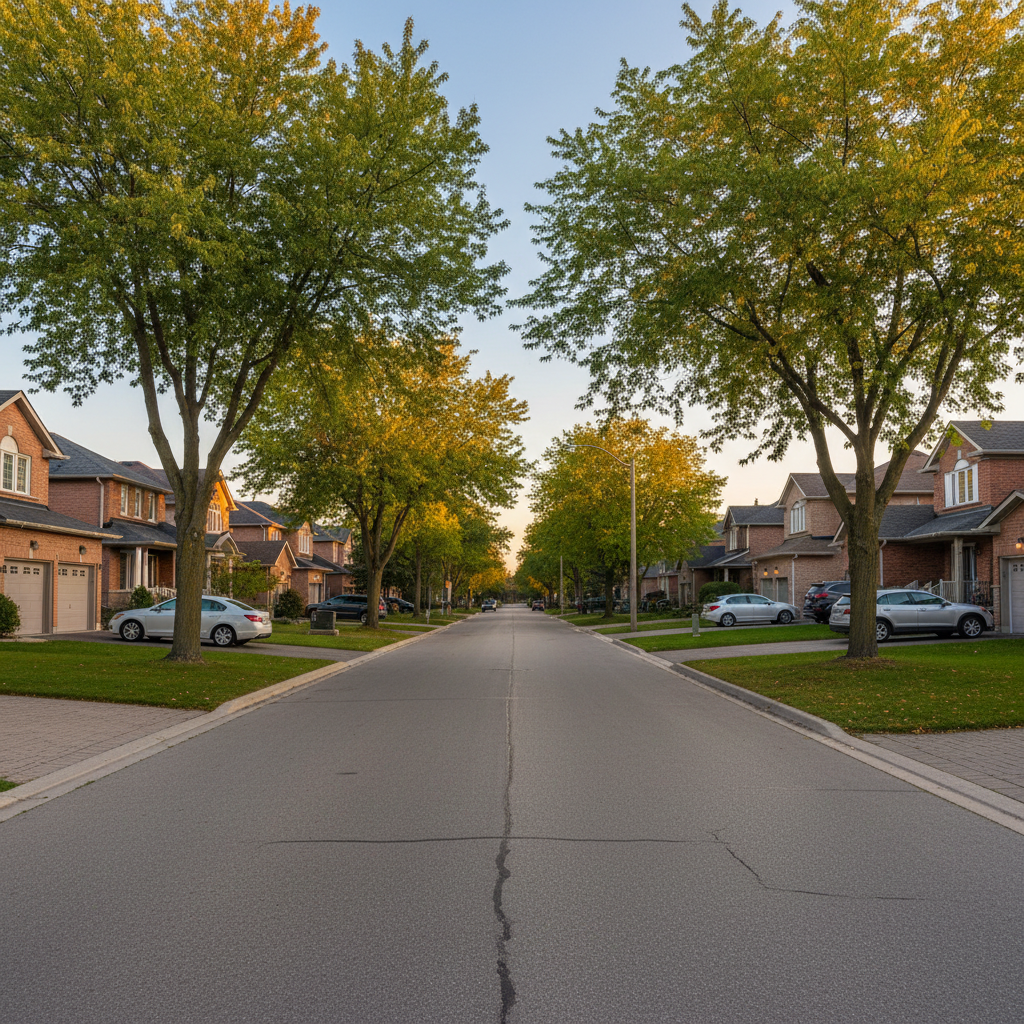
Mississauga home valuation tool questions are the common issues sellers ask when using an address-based “What’s My Home Worth?” estimator. A home valuation tool is an online AVM (automated valuation model) that estimates price using recent sales and local trends. At 52 Scarsdale Rd Suite 205 in North York, we guide Mississauga owners to interpret results and plan next steps.
By Robin Patel — Founder & Realtor (ABR, SRS, RENE)
Last updated: 2026-06-05
Overview: What You’ll Learn (At a Glance)
This guide answers the most-asked Mississauga home valuation tool questions and shows how to turn an instant estimate into a confident listing plan. You’ll see how AVMs compare to CMAs and appraisals, what inputs matter, and how to validate results with on-the-ground context.
- What a home valuation tool is and how it works in plain language
- Why estimates shift week-to-week and how to read those changes
- AVM vs. CMA vs. appraisal: when to use each and why
- Seven inputs that move your estimate most (and how to refine them)
- Eight real Mississauga-style scenarios with practical takeaways
- Checklists, a comparison table, and a simple validation workflow
What Is a Home Valuation Tool?
A home valuation tool is an online estimator that uses an automated valuation model (AVM) to predict market value from recent sales, property details, and neighborhood trends. In metro Toronto—including Mississauga—these tools give a quick directional price, then require local verification for accuracy.
Put simply, an AVM studies patterns in nearby sales and adjusts for your lot size, living area, age, and features. It returns a number (often with a range). That number is a starting point, not a final answer. The gap between “estimate” and “list strategy” is where expert interpretation matters.
Key reasons homeowners use them
- Speed: Instant read on value before deciding next steps.
- Privacy: Explore ideas quietly before calling an agent.
- Benchmarking: Track how value trends with market shifts.
What most tools can’t see (yet)
- Micro-location nuance: School catchments, specific cul-de-sac desirability, and traffic noise.
- Condition and upgrades: Quality of finishes, mechanicals, and layout flow.
- Timing factors: Listing week, staging, and seasonality.
We bridge that gap in Mississauga by pairing your estimate with a tailored Comparative Market Analysis (CMA), on-site notes, and a listing calendar that aligns with buyer demand.
Top Mississauga Home Valuation Tool Questions (Answered)
The most common Mississauga home valuation tool questions focus on accuracy, data sources, and how to update property details. The best approach is to confirm key inputs, compare the estimate with recent local sales, and request a targeted CMA to validate the price range.
1) How accurate are online estimates?
- Short answer: Directionally useful. Expect a range, not a single truth.
- What drives variance: Condition, renos, and micro-location factors tools can’t fully quantify.
- Action: Treat the AVM as a hypothesis. Confirm with a CMA, photos, and a quick walkthrough.
2) Where does the data come from?
- Core inputs: Recent nearby sales, listing history, property records, and market velocity.
- Limitations: Delayed public records and incomplete renovation details can skew results.
- Action: Update bedrooms, bathrooms, finished basement, and lot size to tighten accuracy.
3) Why does my estimate change week-to-week?
- Market moves: New sales within a 0.3–0.6 mile radius can nudge values.
- Seasonality: Spring listings and fall activity often tighten ranges; late winter can widen them.
- Action: Track changes for 2–4 weeks, then pair with a CMA to set timing and strategy.
4) Can I fix an obviously wrong estimate?
- Yes: Correct facts (square footage, bed/bath count, basement finish).
- Add context: Notable upgrades (roof, HVAC, windows) and unique lot features.
- Action: Once facts are clean, request a CMA to recalibrate the range.
5) AVM vs. appraisal—do I need both?
- Different purposes: AVM = quick estimate; appraisal = formal opinion by a licensed appraiser.
- When appraisal matters: Financing, refinancing, estate, or legal needs.
- Action: Use AVM + CMA to plan; add appraisal when a lender or legal process requires it.
How Home Valuation Tools (AVMs) Work
Automated valuation models estimate value by comparing your property to recent nearby sales and adjusting for features like size, age, condition, and lot. They weight the most similar comparables and output an estimate with a confidence range based on available data.
Inside the model—plain English
- Comparable sales: The AVM selects the most similar sales within a tight radius and recent timeframe.
- Feature adjustments: Living area, beds/baths, lot size, age, garage, basement finish.
- Market momentum: Directional trend from the last 30–90 days in your micro-area.
- Confidence score: Higher when many close comps exist; lower for unique or rare homes.
Seven inputs that move your number most
- Above-grade square footage
- Finished basement (yes/no and quality)
- Lot width and depth
- Bedroom and bathroom counts
- Parking/garage type
- Year built and major system updates
- Proximity to recent sales with similar layouts
Why two similar homes get different estimates
- Micro-location: Quiet crescent vs. busier collector road.
- Renovation recency: Five-year-old kitchen vs. original finishes.
- Layout efficiency: Usable square footage and natural light.
Here’s the thing: the AVM is fastest at the “80% answer.” Your next 20% of precision comes from a human-led CMA plus in-person nuance—how the home feels, shows, and competes this month.
AVM vs. CMA vs. Appraisal: Methods Compared
Use an AVM for a fast directional read, a CMA for strategy and pricing, and a professional appraisal for lending or legal needs. Together, they provide speed, precision, and formality in the right order for Mississauga sellers planning to list.
| Method | What it is | Best for | Limitations | Next step |
|---|---|---|---|---|
| AVM (Home Valuation Tool) | Algorithmic estimate from comps and features | Fast, private, early planning | Can miss renos and micro-location nuance | Validate with CMA |
| CMA | Agent-prepared analysis of comps and competition | Pricing strategy to win in current market | Requires local expertise to interpret | Review staging and timing |
| Appraisal | Licensed appraiser’s formal opinion | Lending, refinance, estate/legal matters | Point-in-time; not a marketing plan | Proceed with listing plan |
Best Practices to Use a Home Worth Tool in Mississauga
Confirm facts, refine features, and ground the estimate in hyper-local comps. Then pair the result with a CMA and a 30–60 day listing plan. This workflow turns a quick number into a confident Mississauga pricing strategy.
Step-by-step workflow
- Confirm property facts: Beds, baths, above-grade footage, lot size, parking.
- Refine features: Add basement finish, HVAC/windows age, roof updates, and unique upgrades.
- Map micro-comps: Identify 3–5 recent sales with the same style within ~0.5 miles.
- Note market tempo: Days on market and sale-to-list ratios in the past 30–60 days.
- Run a CMA: Layer context on the AVM to set a working range.
- Choose listing week: Aim for a high-visibility window on your street and school calendar.
- Pre-list tune-up: Light repairs, declutter, and photo-ready staging.
Local considerations for Mississauga
- Target buyer traffic often clusters near parks and schools; homes near Bond Park can see stronger weekend showings when weather is mild.
- Spring and early fall tend to compress days on market; late December typically stretches timelines as families travel.
- In our North York office near Stanford International College, we monitor west-end trends daily and time launches when your micro-area is most active.
Mini checklists
- Data hygiene: Verify every field the tool asks for; missing a bathroom can shift the range.
- Photo set: Capture curb appeal, kitchen, baths, and backyard in daylight.
- Pre-list fixes: Touch-up paint, fix door hardware, refresh caulking.
- Show-ready routine: Lighting, scent-neutral, and secure valuables.
Tools and Resources You Can Use Today
Start with an address-based home worth tool for a quick estimate, then request a CMA and download buyer/seller reports. Combine these with a targeted MLS/IDX search to understand competing listings and recent sales in your micro-area.
- Address-based estimator: Use an online “What’s My Home Worth?” tool to generate an AVM baseline.
- Comparative Market Analysis: Ask for a CMA tailored to your street and home style.
- MLS/IDX search: Review active, pending, and sold listings competing with your home.
- VIP reports: Download concise buyer/seller playbooks to plan prep and timing.
- Neighborhood scouting: Visit open houses that mirror your layout to see buyer reactions.
For additional context on preparing to move, you can explore a practical Mississauga-focused checklist shared in this home buying checklist. For broader Ontario-oriented valuation discussion, see this Ontario value guide and an expert guide to buying in Mississauga. These resources complement your AVM and CMA review.
Case Studies and Real-World Examples
These eight quick scenarios show how Mississauga sellers interpret an online estimate, tighten accuracy with a CMA, and adjust strategy. Each highlights a lever—condition, timing, competition, or marketing—that turns a range into results.
1) Semi-detached near a quiet park
- AVM read: Mid-range with a wide band due to mixed comps.
- Local nuance: Quiet street steps from green space draws weekend buyers.
- Action: Staging + sunny photo day narrows the range; list when two similar homes go firm.
2) Detached with an older kitchen
- AVM read: Slightly below neighbors with recent renos.
- Local nuance: Great lot width and natural light offset dated finishes.
- Action: Minor cosmetic refresh and pro photos elevate perceived value.
3) Townhouse backing onto utility corridor
- AVM read: Conservative due to atypical rear exposure.
- Local nuance: Privacy hedging and clear disclosures reduce buyer friction.
- Action: Position against interior-row comps; schedule showings in daylight.
4) Condo with premium parking
- AVM read: In-line with stack-average.
- Local nuance: Full-size, near-elevator parking adds tangible convenience.
- Action: Highlight parking in first three photos and feature bullets.
5) Backsplit on a busier collector
- AVM read: Discounted vs. quieter crescents.
- Local nuance: Mature trees, fenced yard, and upgrades counter noise concerns.
- Action: Twilight photos and window glazing notes address objections.
6) Renovated bungalow, deep lot
- AVM read: High range with limited recent bungalow comps.
- Local nuance: Deep lot and turnkey condition draw move-down buyers.
- Action: Use a handpicked comp set and host a Saturday open with neighbor invites.
7) Corner-lot semi with extra windows
- AVM read: Mid to high range; layout uniqueness confuses the model.
- Local nuance: Extra light and side yard sell the experience.
- Action: Photo sequence starts with front + side elevation to frame value.
8) Estate sale with deferred maintenance
- AVM read: Lower range; condition drag is real.
- Local nuance: Investors and renovators create competition when terms are clean.
- Action: Emphasize lot, structure, and potential; simplify conditions to increase bids.

Turning an Estimate into a Winning Listing Strategy
Validate the AVM with a focused CMA, decide your launch week, and prep the home for photos. Then monitor nearby actives and pendings daily. This sequence converts an online number into showings, offers, and a strong sale in Mississauga.
Five-part playbook
- Align on range: AVM + CMA produce a working target band.
- Pick the week: Launch when two comparable listings go firm and inventory is tight.
- Prep and stage: Neutral, bright, and clutter-free wins more clicks and showings.
- Marketing cadence: Photo day, listing day, open houses, and mid-week follow-up.
- Offer strategy: Pre-emptive offer rules or an offer night—decide based on competition.
Signals to watch daily
- New actives: Are fresh listings changing buyer choices this week?
- Pendings/firms: Do in-progress deals reduce your competition?
- Showing feedback: Track the top three recurring themes and adjust.
Frequently Asked Questions
Mississauga homeowners ask about accuracy, timing, and how to use an AVM with a CMA. Keep property facts precise, validate with a local analysis, and choose a listing week when your micro-market has fewer competing actives.
How do I improve the accuracy of my online estimate?
Correct the basics first: bed/bath count, above-grade square footage, basement finish, parking, and lot size. Add notes on recent upgrades like windows, roof, or HVAC. Then request a CMA focused on 3–5 nearby sales with the same style to validate the range.
Should I wait for spring to list if my AVM looks strong now?
Not necessarily. If two close comps just went firm and similar homes are scarce, a well-timed winter or late-summer launch can outperform spring. Base timing on competing inventory and buyer activity on your street, not the calendar alone.
Do lenders rely on these online tools for mortgages?
Lenders use formal appraisals and internal risk models, not public AVMs, for underwriting decisions. Use the home worth tool as an early planning aid, then pair it with a CMA and, when required, a licensed appraisal for financing or legal processes.
What if my home is unique and has few nearby comps?
Expect a wider AVM range. We’ll expand the search window, handpick historical comps, and adjust for features the model can’t see. A walk-through, detailed photo set, and a custom CMA close the gap for one-of-a-kind properties.
Key Takeaways
Use a home worth tool for a fast baseline, then validate locally. Clean inputs, handpicked comps, and a timed launch convert an estimate into real demand. That’s the path from number to neighborhood-leading result.
- AVM = fast baseline; CMA = strategy; appraisal = formality.
- Seven inputs move your estimate most—verify each one.
- Pick your listing week based on competing actives and pendings.
- Presentation and timing amplify the value your AVM can’t see.
Let’s Turn Your Estimate into a Plan
Have an estimate and questions? Book a quick consult. We’ll verify your inputs, prepare a focused CMA, and map a 30–60 day launch to compete and win in Mississauga.
If you’re weighing your next move, start with your address-based estimate, gather photos, and reach out. We’ll review your micro-area, confirm your range, and design a launch sequence that fits your goals and timing.