
Ontario Valuation Guide: Know Your Price in 2026
Ontario address-based home valuation explained for 2026. Learn how instant estimates, CMAs, and appraisals work together in Brampton and Toronto.
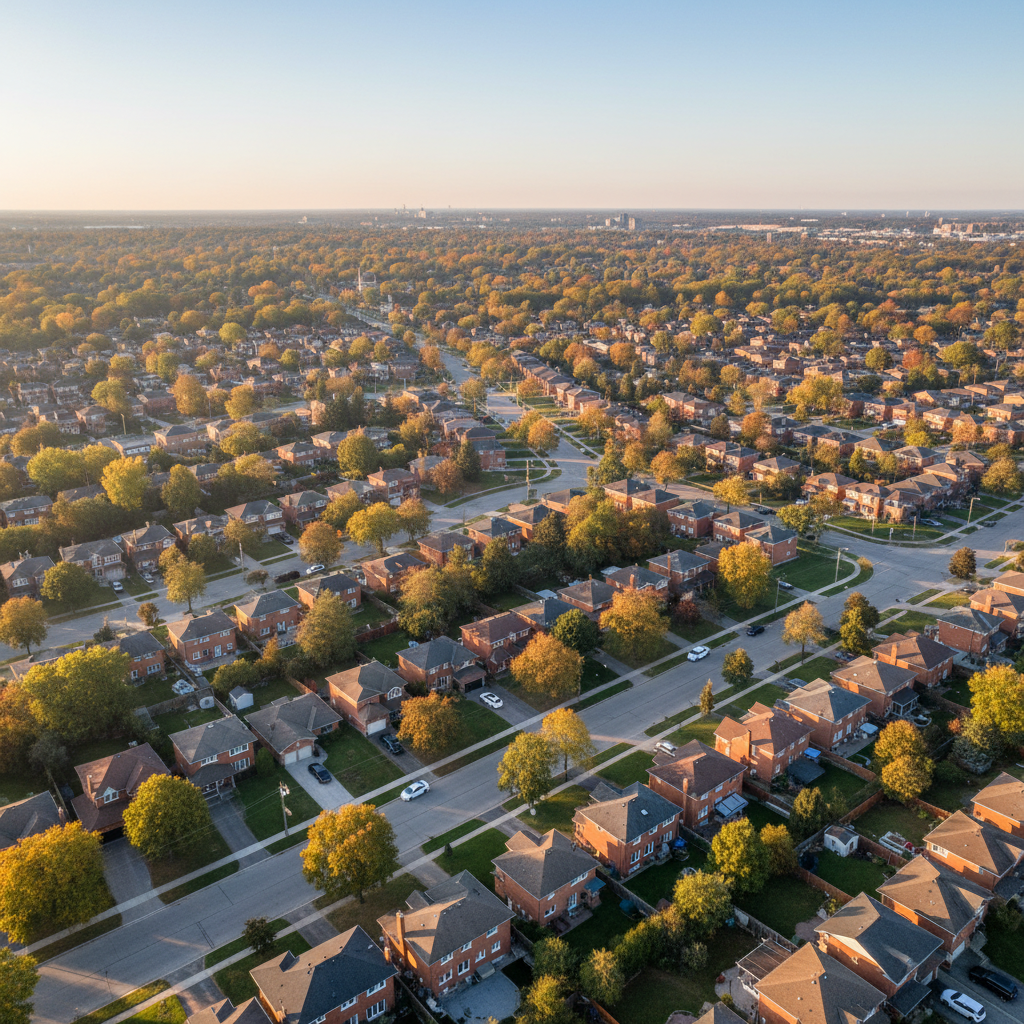
Ontario address-based home valuation is the practice of estimating a property’s market value using its exact street address, recent local sales, and property facts. From our office at 52 Scarsdale Rd Suite 205 in North York, we apply this method for Brampton-area sellers and buyers to quickly frame a data-backed price conversation.
By Robin Patel, Founder & Realtor (RE/MAX METROPOLIS REALTY)
Last updated: 2026-06-03
Above-Fold: Why This Guide Matters + What You’ll Learn
Use this guide to understand Ontario address-based home valuation, the difference between AVMs, CMAs, and appraisals, and how to turn an instant estimate into a smart pricing strategy. You’ll get step-by-step actions, pro tips, tools, and real Brampton examples to move from “curious” to “ready.”
If you want a fast, reliable way to orient your list or offer price, this guide is for you.
- What address-based valuation is—and isn’t
- When to trust an instant estimate vs. request a CMA
- How we convert estimates into winning list and offer strategies
- Tools you can use today (search, reports, valuation)
- Real Ontario and Brampton mini case studies
Overview
An address-based estimate gives homeowners a quick, location-specific price range using comparable sales and public records. It’s best used as a starting point, then refined with a Realtor-prepared CMA and, when needed, a formal appraisal to finalize decisions for listing or buying.
Think of valuation as a ladder: instant estimate, then CMA, then appraisal when required. Each rung adds accuracy and confidence for negotiations, financing, and timing.
- Instant estimate (minutes): Uses address and recent sales to create a likely range.
- CMA (1–2 days): Local Realtor analysis with 3–6 adjusted comparables.
- Appraisal (scheduled): Lender-grade, on-site inspection when financing or legal certainty is needed.
Local considerations for Ontario
- Toronto metro nuance: Micro-markets shift block by block; our North York location near Bond Park helps us monitor changes affecting Brampton and neighboring suburbs.
- Seasonality: Spring and early fall often show higher buyer traffic; we factor showing volume and days-on-market shifts into the CMA.
- Policy awareness: Mortgage rule changes and local inventory swings can widen or tighten valuation ranges; we brief you before you act.

What Is Address-Based Home Valuation?
Address-based home valuation estimates market value from a specific street address by blending comparable sales, neighborhood trends, and property details. It’s fast and directional, guiding next steps like requesting a CMA, refining a list price, or shaping an offer strategy.
At its core, valuation answers one question: where would informed buyers and sellers likely meet today? Address-level inputs narrow the search to your street, school zone, and style of home.
- Inputs: Recent solds, active competition, size, lot, age, condition, upgrades.
- Context: Days on market, seasonality, buyer demand, interest-rate climate.
- Output: A realistic range and confidence notes (tight vs. wide).
We use your address to anchor reality, then verify assumptions with in-person context—finishes, maintenance, light, and flow—which algorithms often miss.
Why Ontario Address-Based Valuation Matters Right Now
Granular, address-level pricing helps Ontario sellers avoid overpricing that stalls momentum and buyers avoid chasing hot listings. In Toronto’s dynamic metro and Brampton’s family neighborhoods, precise ranges shorten time-to-offer and reduce negotiation friction.
Here’s the thing: a five-minute check can prevent weeks of misalignment. When your initial price fits how buyers search and agents comp, your listing earns more showings and stronger early feedback.
- Speed: Instant ranges frame decisions quickly.
- Focus: Filters noise to your true competition set.
- Confidence: Aligns seller expectations and buyer willingness.
- Negotiation edge: You walk in with comps and rationale, not guesswork.
For Brampton moves, we regularly combine the estimate with a one-page map of 3–6 comparables. That visual alone often clarifies the conversation for families planning their next step.
How Address-Based Valuation Works (Step-by-Step)
Start with an instant address estimate, then validate with a CMA, on-site insights, and a live market check. Use a clear, repeatable process so your list or offer price reflects current competition, buyer traffic, and property condition.
- Enter address: Generate a quick estimate and range.
- Identify comparables: Pull 3–6 recent solds and 3–5 active/pending listings.
- Adjust comps: Normalize for beds, baths, lot, age, parking, renovations.
- Inspect condition: Note finishes, layouts, light, curb appeal, and repairs.
- Check absorption: Gauge days on market and showings trend this month.
- Set strategy: Choose a price tactic (market-match, value-leader, or premium).
- Monitor live: Reassess weekly; pivot if feedback or traffic shifts.
Each step adds signal and reduces guesswork. We document assumptions and outcomes so you can track cause and effect over the first two weeks online.
Types, Methods, and Approaches You’ll See
Valuation approaches include AVMs for instant ranges, CMAs for agent-grade analysis, and lender appraisals for financing. Hybrids—like AVM + quick walk-through—offer speed plus nuance for many Ontario homes.
Automated Valuation Model (AVM)
- What it is: Algorithmic estimate using address, sales data, and property records.
- Strength: Speed (minutes), consistent math.
- Limit: Can miss renovations, micro-location, and layout quality.
Comparative Market Analysis (CMA)
- What it is: Realtor-built analysis with 3–6 close comps and adjustments.
- Strength: Local nuance, photos, and on-the-ground context.
- Limit: Requires expert time; quality varies by agent experience.
Formal Appraisal
- What it is: Lender-grade report with interior inspection and standardized methodology.
- Strength: Highest weight for financing and legal needs.
- Limit: Scheduling time; point-in-time snapshot.
| Method | Primary Use | Typical Inputs | Turnaround | Accuracy Context |
|---|---|---|---|---|
| AVM | Quick orientation | Address, recent sales, records | Minutes | Great for a starting range |
| CMA | Pricing strategy | 3–6 comps, adjustments, photos | 1–2 days | Best balance of speed and nuance |
| Appraisal | Financing/legal | Inspection, standardized forms | Scheduled | Highest formal weight |
Best Practices for Sellers and Buyers
Use the instant estimate to set expectations, then lean on a CMA and walk-through to finalize strategy. Calibrate weekly during days 1–14 on market; for buyers, refresh comps 24–48 hours before offering.
For Sellers
- Price window, not point: Work with a 2–3% range to stay flexible.
- Match your micro-market: Compare only against homes within 0.5–1.0 km and similar age/style.
- Front-load condition: Tackle 3–5 high-impact fixes (paint, lighting, hardware, landscaping).
- Watch week-one signals: Track impressions-to-showings and showing-to-feedback ratios.
- Adjust decisively: If traffic lags in week two, act—don’t wait a month.
For Buyers
- Define ceilings: Use the range to set a walk-away number before emotions spike.
- Segment comps: Separate fixer comps from renovated ones; don’t average apples and oranges.
- Time matters: A 14–21 day-on-market listing can signal room to negotiate.
- Offer playbook: Prep 2–3 offer scenarios tied to inspection and closing flexibility.
In our experience, clarity on comps cuts negotiation back-and-forth by one to two rounds. That saves time and keeps goodwill intact on both sides.
Tools and Resources You Can Use Today
Start with an address-based estimate, then layer a custom CMA, MLS/IDX search, and VIP reports. These tools work together to turn curiosity into a confident plan.
- Address-based “What’s My Home Worth?”: Get a quick range to frame your options.
- MLS/IDX search: See active competition and price positioning in real time.
- VIP real estate reports: Learn listing prep checklists, offer timelines, and move planning.
- Showcase and featured listings: Study how top listings market renovations, photos, and staging.
- One-page CMA summary: Request a 3–6 comp snapshot before you list or offer.
Prefer a deeper dive? We’ll walk you through each screenshot and explain what to watch in weeks one and two online.

Free 10-minute valuation huddle
Have an address in Brampton or nearby? We’ll review the instant range, pick the right comps, and map next steps. No pressure—just clarity.
Mini Case Studies: Ontario and Brampton Examples
These short scenarios show how an instant estimate becomes a clear plan. We pair the address-based range with micro-market comps, condition notes, and timing to guide list or offer strategy.
- North Brampton detached (4-bed): Instant range tight; CMA confirmed renovated kitchen premium. Listed at market-match, 10 showings in 3 days, strong first-week offer.
- Peel Village bungalow: Wide estimate due to mixed renovations nearby. Walk-through revealed dated baths; priced as value-leader, attracted budget-conscious buyers.
- Brampton townhouse (end unit): Comp set showed parking and end-unit light adding 1–2% vs. mid-row; offer aligned to renovated comps only.
- Mississauga condo (2-bed): HOA amenities and transit access tightened range; refreshed comps 24 hours pre-offer due to fast-moving actives.
- Etobicoke semi-detached: Backyard exposure improved photos and showings; CMA adjusted for lot depth and lane access.
- Kitchener freehold: School catchment shift changed comp radius; kept to 0.6 km and similar age for accuracy.
- Cambridge townhome: New-build competition pressured resale pricing; positioned with staging to separate from builder-grade finishes.
- Oakville detached: Luxury features created mismatch in AVM; CMA used only premium finishes comps, widened marketing window.
- Waterloo condo-loft: Unique layout reduced comp count; leaned on per-square-foot analysis and buyer feedback loop.
- London Ontario bungalow: Seasonality widened days-on-market; used value-leader tactic to drive early momentum.
- Brampton condo (first-time buyer): Client used VIP report checklist; offer playbook with three scenarios won without overextending.
- North York investment condo: Rental yield context shaped negotiation; CMA included 12-month lease comps.
- Brampton side-split: Micro-location near parks boosted family appeal; pricing held firm after first-week traffic proved demand.
- Mississauga stacked town: Parking and storage differences explained value gaps; offer aligned with like-for-like comps only.
Notice the pattern: we start with the address estimate, then sharpen with comps, condition, and timing. That’s the formula across the GTA.
Turn Your Estimate into a Pricing Strategy
Pick a pricing tactic—market-match, value-leader, or premium—based on comp alignment and showing demand. Document assumptions and set decision gates for week one and two.
Three common tactics
- Market-match: Price at the median of close comps when finishes are comparable.
- Value-leader: Undercut near-identical comps by a small, clear margin to drive showings.
- Premium: Aim above comps when renovations and presentation are truly superior.
Signals that guide the choice
- Comp distance and recency: Within 0.5–1.0 km and 90–180 days is ideal when available.
- Condition score: Stack-rank kitchens, baths, flooring, paint, curb appeal.
- Traffic trend: Compare day-one to day-three showing pace.
- Buyer type: First-time, upsizer, investor—each reads value differently.
Set two checkpoints: after 7 days and after 14 days on market. If traffic or feedback misses targets, adjust quickly rather than waiting.
Common Pitfalls (and How We Avoid Them)
Biggest mistakes include averaging unlike comps, ignoring condition gaps, and hoping time fixes traffic. We prevent this with tight comp selection, walk-through notes, and clear week-one targets.
- Averaging apples and oranges: Keep renovated vs. original comps separate.
- Stretching the radius: Crossing busy corridors can distort value perception.
- Forgetting photos: Listing media quality moves showing counts; your comp set must reflect that.
- Waiting too long: If you miss traffic goals by week two, act decisively.
- Overfitting to a single sale: Anchor to clusters, not outliers.
We treat your first two weeks as a live experiment with documented inputs, targets, and adjustments. That mindset protects momentum.
How We Work With You (Ontario + Toronto Metro)
We start with an address estimate, deliver a one-page CMA within 24–48 hours, and align on a pricing tactic. In Ontario’s Toronto metro—including Brampton—we meet on-site to factor condition and timing into your launch plan.
- Kickoff: Address estimate and goal-setting call (10–15 minutes).
- CMA delivery: 3–6 comps, photos, adjustments, and a recommended tactic.
- On-site walk-through: Condition scoring and prep list (3–5 high-impact items).
- Launch plan: Staging/media calendar and week-one targets.
- Feedback loop: Showings, buyer themes, and pivots if needed.
Our ABR, SRS, and RENE designations shape how we analyze, position, and negotiate—so you get clarity from estimate to closing.
Helpful Research for Deeper Context
Looking for broader market reading? These resources explain valuation frameworks, seller prep, and team workflows. Use them to complement your address-based range and CMA.
For an additional overview on understanding home value and seller workflows, see this Ontario-focused value guide. If you’re evaluating selling routes, this for-sale-by-owner guide outlines trade-offs that can affect pricing strategy. For a metro-wide lens, review this Toronto market overview to understand inventory narratives.
Note: We integrate third-party context into our CMA, but final recommendations always reflect your exact address, comps, and timing.
Frequently Asked Questions
Here are direct answers to common questions about Ontario address-based valuation, CMAs, and timing. Each response is concise so you can act with confidence.
What is the fastest way to get an address-based estimate?
Enter your Ontario address into a reputable home-worth tool to generate a quick range. Use that as your starting point, then request a Realtor-prepared CMA to refine the number before listing or making an offer.
How many comparables should a solid CMA include?
A reliable CMA typically analyzes 3–6 recent solds and 3–5 active or pending listings within 0.5–1.0 km and 90–180 days when available. Each comp is adjusted for beds, baths, lot, parking, age, and renovations.
When should I order a formal appraisal?
Request an appraisal when financing or legal certainty is required, or when a unique property lacks adequate comparables. Use your CMA to brief the appraiser on renovations and recent neighborhood sales.
How often should I refresh comps before offering?
Refresh comparables 24–48 hours before submitting an offer, especially in fast-moving GTA submarkets. Recent pendings and new actives can shift leverage and help you select the right offer scenario.
Does seasonality affect my valuation range?
Yes. Spring and early fall often bring higher showing volumes, which can tighten ranges. In slower months, expect wider ranges and plan a pricing tactic that prioritizes traffic and presentation.
Key Takeaways
Use an address-based estimate as your starting compass, then finalize with a CMA and on-site context. Price to your micro-market, track week-one signals, and be ready to pivot.
- Start with an instant, address-based range
- Refine with a local CMA (3–6 solid comps)
- Choose a pricing tactic that fits demand
- Set decision gates at day 7 and 14
- For buyers, refresh comps 24–48 hours pre-offer
Conclusion: Your Next Three Steps
Get your address estimate, request a CMA, and align on a pricing tactic. This sequence turns curiosity into a confident plan for listing or offering in Ontario’s Toronto metro and Brampton.
- Run an address-based “What’s My Home Worth?” estimate.
- Request a one-page CMA with 3–6 true comparables.
- Decide your tactic and launch with clear week-one targets.
If Real Estate is Your Game, Remember Only One Name, Robin Patel. When you’re ready, we’ll turn your estimate into a winning strategy—step by step.