
Home Pricing: Sell Faster and Avoid Low Offers in 2026
Learn pricing a home to sell in North York: CMA steps, proven 2026 strategies, timing, and seller best practices from ABR/SRS/RENE Realtor Robin Patel.
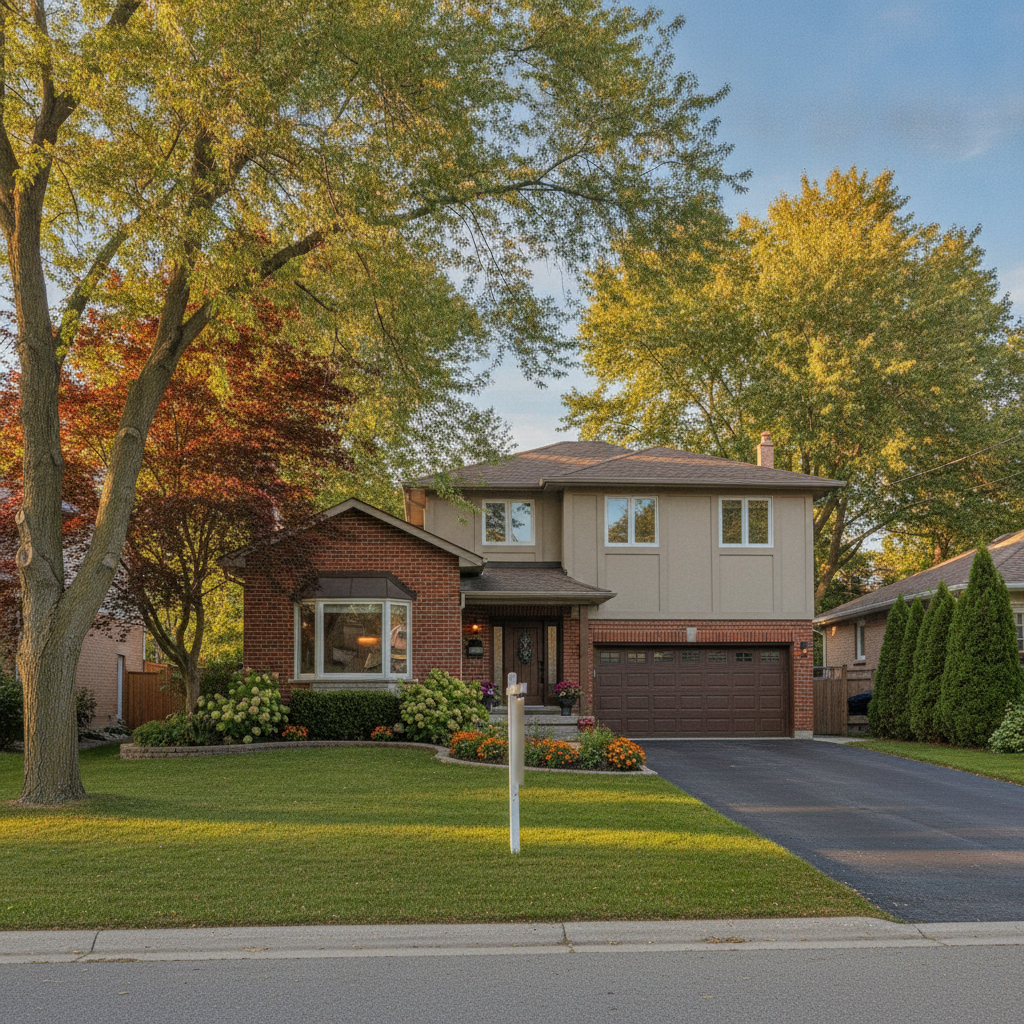
Pricing a home to sell is the process of setting a list price that aligns with current buyer demand, comparable sales, and your timing goals. In North York, the right price creates urgency, maximizes showings, and reduces days on market. Done well, it positions your home competitively and attracts qualified offers fast.
By Robin Patel, Founder & Realtor — RE/MAX METROPOLIS REALTY | Last updated: July 7, 2026
Overview and table of contents
This complete guide shows you how to price a home to sell with confidence: what accurate pricing means, why it drives faster sales, the step-by-step CMA process, proven pricing strategies, local North York nuances, and seller checklists backed by real representation experience.
Use this expert guide from a seller’s perspective. You’ll learn how to align price with buyer psychology, data, and your move-out plan—without leaving money on the table.
- What pricing a home to sell really means
- Why pricing matters in North York’s market
- Step-by-step: How a Comparative Market Analysis (CMA) works
- Proven pricing strategies for 2026 listings
- Best practices before you list
- Tools and resources sellers can use
- Real mini case studies from local sellers
- FAQ and key takeaways
What is “pricing a home to sell”?
Pricing a home to sell means selecting a list price grounded in comparable sales, active competition, and buyer demand so the home attracts serious showings in the first 7–14 days. It is a data-informed decision that balances market reality with your timing and negotiation goals.
At its core, pricing a home to sell aligns three inputs: recent comparable sales (sold), current competition (active), and trend signals (pending). A thoughtful price leverages urgency in that early window when most buyers discover new listings.
- Comparable sales (SOLD): Similar homes that closed recently set an anchor for value.
- Active competition: What buyers will compare you against right now determines perceived value.
- Pending data: Properties under contract reveal what’s working at today’s price points.
- Condition and upgrades: Renovations, layout, and maintenance shift buyer willingness to act.
- Timing and seasonality: Demand and supply ebb and flow through the year, affecting strategy.
As a REALTOR with ABR, SRS, and RENE designations, we combine this data with negotiation planning—sequencing pricing, showing logistics, and offer strategy so you gain leverage when interest peaks.

Why smart pricing matters in North York
Smart pricing compresses time on market, concentrates buyer attention, and reduces lowball offers. In North York, listings that enter the market aligned with comparables see more qualified showings and stronger first-week signals—vital for negotiation leverage.
Here’s the thing: most attention clusters early. New listings get the largest discovery burst from saved searches and agent alerts in week one. If the price is off, you squander that momentum and invite “What’s wrong with it?” questions later.
- Faster traction: Correct pricing typically yields the highest showing volume in the first 7–10 days.
- Stronger perception: Market-fair pricing communicates credibility; overpricing erodes trust and click-through rates.
- Better negotiation setup: When activity is brisk, you can anchor timelines and terms with confidence.
- Reduced carrying risk: Longer marketing cycles increase chances of condition changes or buyer fatigue.
In our experience guiding North York and Brampton sellers, the best outcomes come from pairing a clean presentation with a price that helps buyers say “yes” quickly. That’s how you avoid avoidable price reductions and maintain negotiating power.
Local considerations for North York
- Use open-house timing that avoids major events or peak activity near Bond Park to keep traffic and parking smooth for visitors.
- Spring and early fall often see steady buyer tours; align your prep so listing photos capture greenery and natural light common to North York streetscapes.
- If you’re near Ace Acumen Academy, highlight walkability and transit access in your marketing remarks—features that support value arguments during negotiations.
How home pricing works: the step-by-step CMA
A Comparative Market Analysis (CMA) evaluates recent sales, active competitors, and pending transactions for similar homes. The outcome is a pricing band with a recommended list price and strategy aligned to your condition, upgrades, and timeline.
We build CMAs to be decision tools—not just spreadsheets. The aim is to position your home where the most buyers will engage quickly while leaving room to negotiate terms that matter to you.
- Define the subject: Confirm square footage, beds/baths, lot, parking, age, and upgrades.
- Pick comps: Select recent nearby sales matched by style and condition; adjust for differences.
- Scan active competition: Identify what buyers will cross-shop and how you’ll stand out.
- Read pendings: Learn which list prices and days-on-market triggered accepted offers.
- Set the pricing band: Establish a reasonable range and the opening list price.
- Plan the launch: Tie price to photography, staging, showing windows, and offer dates.
Comparison: CMA vs. online estimate vs. automated model
| Approach | Strength | Limit | Best Use |
|---|---|---|---|
| CMA by REALTOR | Context-aware; adjusts for condition, upgrades, micro-location. | Requires professional time and property access. | Listing strategy and negotiation planning. |
| Online estimate | Fast directional snapshot; convenient. | Can miss renovations or unique features. | Early conversation starter. |
| Automated valuation model | Broad data coverage; consistent math. | Less sensitive to nuance; lag on fast shifts. | Market monitoring and sanity checks. |
On TheReliableRealtor.ca, sellers often start with the address-based “What’s My Home Worth?” snapshot, then we refine with a full CMA to account for layout and upgrade quality. That two-step path speeds decisions while keeping accuracy front and center.

Pricing strategies that work in 2026
Effective 2026 strategies include market-fair pricing for early traction, bracket (band) pricing to capture more search filters, and calibrated under-list launches where demand supports it. The right choice depends on comps, condition, and your timeline.
Not every house should list the same way. We calibrate strategy to micro-market signals and your objectives—speed, certainty, or specific terms.
- Market-fair launch: List at the heart of your CMA band to trigger broad engagement and reduce haggling over perceived overpricing.
- Bracket (band) pricing: Position near round-number thresholds so you appear in adjacent buyer searches (for example, aligning just below a common filter).
- Calibrated under-list: In high-demand pockets, a slightly conservative opening can generate urgency and structured offer rounds—best when your presentation is flawless.
- Aspirational with checkpoints: If you test the top of the band, schedule clear review points for adjustments to avoid staleness.
- Psychological price points: Use simple milestones buyers recognize; messy numbers slow decisions.
- Terms-first thinking: Sometimes the “win” is timing, deposit structure, or flexibility rather than squeezing the last dollar—price supports that outcome.
We map the likely showing curve for each strategy so you know what to expect in week one versus week three. When signals deviate, we pivot decisively rather than waiting out buyer fatigue.
Best practices before you list
Pre-list excellence multiplies pricing power. Tight repairs, clean staging, professional photos, and clear disclosures reduce buyer friction. Your price works best when buyers can visualize move-in day without uncertainty.
Here’s how to make your price “stick” when the listing goes live.
- Repair triage: Fix the items buyers notice first—entryway, lighting, door hardware, paint touch-ups, caulking.
- Staging essentials: Neutral colors, decluttered surfaces, and balanced furniture make rooms feel larger and brighter.
- Pre-inspection choices: For older systems or past repairs, clarity can build trust and reduce conditional re-trades.
- Professional photography: Maximize daylight; preview the photo sequence to ensure the lead image is scroll-stopping.
- Showing logistics: Offer flexible windows in week one; momentum matters.
- Disclosure discipline: Organized documentation supports a clean negotiation path.
If you love checklists, this home selling checklist offers a practical pre-list framework you can adapt to North York homes and townhouses.
Tools and resources sellers can use
Combine a quick online estimate with a full CMA and a launch calendar. Leverage buyer feedback loops, showing analytics, and weekly check-ins so your price stays aligned with the market and your move-out timeline.
Robin Patel’s site, TheReliableRealtor.ca, is built for this workflow. Sellers in North York and Brampton typically use three touches before launch.
- What’s My Home Worth snapshot: Address-based estimate for directionality.
- Full CMA consult: Adjust for upgrades, micro-location, and buyer profiles.
- Launch calendar: Time photos, remarks, and showing blocks around your life schedule.
- Feedback loop: Track what buyers mention most—kitchen finishes, yard size, parking—then refine marketing remarks.
- Offer readiness: Confirm your preferred terms so we negotiate with clarity when activity peaks.
Mid‑article consultation invite
Want a pricing band you can act on? Book a no-pressure chat with Robin Patel. We’ll review comps, competition, and timing so your listing launches with purpose.
Mini case studies: North York and Brampton sellers
Strategic pricing plus crisp presentation produces faster, stronger outcomes. These short scenarios show how adjusting the price band and launch plan changes showing volume, offer quality, and negotiation control.
Real stories change how theory feels. Here are condensed examples based on our representation playbooks.
- North York semi-detached: After a light paint refresh and lighting swap, we launched at the center of the CMA band. Week-one showings exceeded expectations, and an early clean offer allowed a comfortable closing date match.
- Brampton townhouse: We used bracket pricing just under a common search threshold. Traffic broadened across two buyer pools; the accepted offer aligned with the preferred possession timeline.
- Detached near a park corridor: Calibrated under-list with a defined review date led to multiple tours in three days. The chosen offer met deposit and timing priorities without prolonged negotiation.
- Condo with recent kitchen reno: A CMA adjustment for finish quality, plus pro photos, countered older comps. Market-fair launch delivered steady showings and a straightforward conditional period.
We’ve found that clarity wins: pick a strategy, anticipate the showing curve, and be ready to adapt by a pre-set milestone if signals underperform.
Timing, seasonality, and momentum
Timing amplifies your price. Aim for strong light and garden appeal, avoid major local disruptions, and keep the first week open for showings. When you stack timing with the right list price, momentum compounds.
In practical terms, that means pairing your CMA with a calendar. Daylight, landscaping, and school-year rhythms shape how buyers tour. A recent market guide on the best time to sell in Toronto outlines why early spring and early fall often balance supply and demand effectively.
- Photo-first mindset: Schedule shoots for peak daylight; exterior images matter more than most sellers expect.
- Listing go-live: Coordinate with your weekend availability to maximize early traffic.
- Offer choreography: If demand is high, a clear offer window helps concentrate decisions.
Common pitfalls to avoid
Overpricing, ignoring feedback, and delaying adjustments create staleness. Protect momentum by setting review points, responding to showing comments, and updating remarks or visuals quickly if a narrative isn’t landing.
Even well-prepped homes can miss if the story and strategy drift. A concise list of avoidable mistakes can keep you ahead of issues that sap leverage.
- Chasing yesterday’s comp: Markets move; a comp from months ago may no longer anchor today’s buyers.
- Hiding small defects: Surprises late in the process lead to re-trades and timing stress.
- One-and-done photos: If weather or staging missed the mark, reshoot the lead image.
- Neglecting remarks: Clarify parking, storage, and commute details—often decisive for urban buyers.
- Delaying the pivot: If week-one signals underperform, act by your pre-set checkpoint.
For a concise reminder list, see this overview of selling pitfalls many Ontario homeowners run into when launching a listing.
Frequently asked questions
Sellers ask about timing, appraisals, price changes, and the gap between online estimates and CMAs. These concise answers clarify how to keep momentum and protect negotiation strength throughout your sale.
How do I choose between a market-fair launch and a calibrated under-list?
Look at demand indicators in your CMA: recent sales pace, showing feedback, and the number of competing actives. If multiple comps went fast and your presentation is excellent, a calibrated under-list can create urgency. If demand is balanced, a market-fair launch reduces friction and protects timeline certainty.
Do online estimates replace a full CMA?
No. Online estimators are helpful for a directional starting point, but they can miss renovations, micro-location advantages, or layout changes. A CMA adds context, adjusts for condition, and ties price to a launch plan that supports your goals and negotiation preferences.
When should I adjust the list price?
Set a checkpoint in advance—often after your first 7–14 days. If showings and inquiries underperform your forecast and the feedback points to price sensitivity, adjust decisively. Also refresh lead photos or remarks the same day so the market understands what changed and why.
Does timing really impact pricing power?
Yes. Daylight, landscaping, and local schedules influence tour volume. When you combine a strong timing window with the right price, you compound first-week attention—precisely when most serious buyers discover new listings through saved searches and alerts.
Conclusion and next steps
Pricing a home to sell is a strategic alignment of comps, competition, and timing. Launch with clarity, monitor signals, and pivot promptly. That’s how you sell faster, discourage low offers, and protect the terms that matter to you.
Key takeaways
- Most leverage lives in week one; price for traction, not hope.
- A CMA beats guesswork—use comps, actives, and pendings to set the band.
- Choose a strategy (fair, bracket, or calibrated under-list) that fits demand.
- Pre-list excellence—repairs, staging, photos—makes your price believable.
- Set a review checkpoint and adapt decisively if signals lag.
Action steps
- Get your address-based “What’s My Home Worth?” snapshot.
- Book a CMA consult and launch calendar review.
- Align staging, photos, and showing logistics with your first-week window.
- Clarify negotiation terms you value most before offers arrive.
Ready to talk strategy for your North York or Brampton property? Start with a conversation at TheReliableRealtor.ca—then list with confidence.